#1 · Best overall
Approx. Price
$80-$92
Capacity
About 400 ml
Steams
Yes
Self-Cleaning
Yes

As an Amazon Associate, Parents Love Best earns from qualifying purchases. Learn more
The best baby food maker steams and blends fresh produce in one bowl, so you skip the stovetop pot. We compared 10 Amazon best sellers on capacity, cleanup, materials, and price.
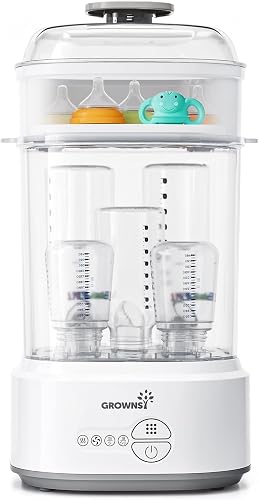
The Grownsy Baby Food Maker is a steamer-blender that cooks and purees food in one Tritan bowl.
Prices are approximate as of October 2026 and change often on Amazon. Check the current price before you buy.


A good baby food maker cooks food evenly, blends it to the right texture for your baby's stage, and cleans up in a few minutes. Demand is high: Amazon US logged about 23,128 searches for "baby food maker" in a single week in early 2026 (ASINSIGHT, 2026). Use the criteria below to compare models before you buy.
A steamer-blender (also called an all-in-one baby food maker) cooks food with steam and then purees it in the same appliance. A baby food mill is a hand-cranked tool that mashes soft, cooked food without electricity. This article uses those two terms throughout.
Each review below covers what the baby food maker does well, where it falls short, and which kind of parent it suits best.
The Grownsy Baby Food Maker is a steamer-blender that cooks and purees food in one Tritan bowl. It earns the top spot because it held the number 1 Best Seller rank in Amazon’s Baby Food Mills category for six consecutive months (GROWNSY via ABNewswire, 2026).
The raised steam basket is the main reason Grownsy leads this list. Food sits above the water line, so steam reaches every side of a carrot cube instead of boiling the bottom layer. You get evenly cooked pieces that blend smooth without stringy bits.
Texture control is simple for first-time parents. Auto mode steams and blends on its own. Manual mode lets you pulse in short bursts, which helps when your baby moves from thin stage 1 purees to lumpier stage 2 mashes around 8 to 9 months.
The bowl holds about 400 ml (Babylist, 2026), or roughly four to six baby portions. That suits families who cook every two or three days. Some retailer listings quote 300 ml for the newer basket version, so confirm the exact model on Amazon before ordering.
Cleanup takes very little effort. The self-clean mode rinses the bowl with water and steam, and the wide opening lets you reach the blades with a brush. The sterilize mode also handles pacifiers and small feeding parts between batches.
The low-water alert prevents a common problem. Running a steamer dry can scorch the heating plate and shorten the machine’s life. Grownsy beeps before the tank empties, which protects the unit during a rushed early-morning prep session.
First-time parents who want one machine that steams, blends, and cleans itself at a mid-range price.
Parents who batch-cook a week or more of purees in one session.
The Bear Baby Food Maker is a steamer-blender with an 18.5 oz dual-layer steam basket. It ranks among the top sellers in Amazon’s Baby Food Mills category and often sells well below its $69.99 list price (Dealmoon, 2026).
The two-layer basket is the standout. You can steam carrots on one level and apples on the other without the flavors mixing. That lets you cook two different purees in one cycle, which halves your prep time on batch days.
Capacity is noticeably larger than most machines in this price range. The Bear handles up to five servings per cycle, compared with three on many compact models. For parents who freeze puree cubes, that difference adds up to fewer sessions each week.
The flip design keeps things simple. After steaming, you turn the container over and press a button to puree. Food never leaves the container, so there is no pouring hot vegetables into a separate blender jar and no extra jar to wash.
The self-cleaning cycle uses high-temperature steam to flush the inner parts of the machine. Those internal areas are hard to reach with a brush, so this feature saves real scrubbing time and helps prevent buildup in the steam path.
The sterilizing function adds value beyond baby food. You can sanitize bottles and small feeding parts in the same appliance. That means one fewer gadget on the counter, which matters in smaller kitchens.
Budget-minded parents who want to batch-cook and freeze several purees each week.
Parents who prefer preset programs that set cook times automatically.
The BEAR 2024 Baby Food Maker is a one-step steamer-blender with a touchscreen and built-in menus for different foods. You pick vegetable, fruit, fish, or meat, and the machine sets the cook time for you (BEAR product listing, 2026).
The preset menu removes the guesswork. New parents often don’t know how long to steam chicken versus sweet potato. The BEAR 2024 stores those times, so you choose the food type and walk away until it finishes.
The four blades spin at 2,875 revolutions per minute, according to the brand listing. That speed breaks down fibrous foods like green beans and poultry into a smooth puree, which matters for babies just starting solids who can’t handle lumps.
Safety features are well thought out. The machine only powers on when the blender cup lid is correctly locked in place. A water-shortage reminder also warns you before the steam tank runs dry, which protects the heating element.
Cleanup is mostly automatic. Add clean water, start the self-clean cycle, and the machine rinses the bowl and blades. One reviewer notes the unit itself is not dishwasher safe, so plan on hand-rinsing any parts the cycle misses (faucetfam, 2026).
The 400 ml bowl covers two to three days of meals for one baby. It’s enough for daily cooks, though parents who freeze in bulk may prefer the larger Bear dual-layer model above.
First-time parents who want the machine to choose cook times for them.
Parents who rely on the dishwasher for cleanup.
The NutriBullet Baby Complete Food-Making System (model NBY-50100) is a 200-watt blender with a full set of storage cups and a freezer tray. It does not steam, so it suits parents who already cook food on the stove or own a separate steamer.
The storage system is the main draw. Each of the six cups has a date dial on the lid, so you can mark when you made a puree and see at a glance what needs using first. That matters because homemade baby food has a short fridge life.
The 32 oz batch bowl is the largest blending container on this list. You can puree enough food for a week in one go, then portion it into the freezer tray. For parents who batch-cook on weekends, that saves several weeknight sessions.
You need to let food cool before blending. One Best Buy reviewer advises waiting until steamed food has cooled completely before it goes in the NutriBullet Baby (Best Buy, 2026). Plan for that cooling time in your prep routine.
The blender also handles raw soft foods. Banana, avocado, and ripe pear need no cooking, so you can blend them straight in the short cup. That makes it a quick tool for fresh fruit purees on busy mornings.
It pairs well with the nutribullet Baby Turbo Food Steamer below. Buying both gives you a two-appliance setup with a large blending bowl and a separate steamer that also sterilizes bottles.
Parents who batch-cook on weekends and want an organized freezer system.
Parents who want a single appliance that cooks and blends.
The nutribullet Baby Turbo Food Steamer (model BSR-0801N) is a dedicated steamer with five steam settings and a built-in timer. It cooks fresh food, thaws frozen puree, and sterilizes bottles, but it does not blend (Best Buy, 2026).
The sterilizing function makes this useful from the newborn stage. You can sanitize bottles and pacifiers for months before your baby starts solids. Once solids begin around six months, the same appliance switches to cooking vegetables and fruit.
The five steam settings and timer cover most first foods. The included booklet lists steaming times for common vegetables, according to buyer reviews (Desertcart, 2026). That helps new parents avoid undercooked carrots or mushy broccoli.
The defrost function solves a common batch-cooking problem. Frozen puree cubes thaw in the steamer without a microwave, which avoids the hot spots microwaves can leave in baby food.
The 400 cubic inch capacity fits enough food for three to four servings per cycle (Peggy O’Mara, 2026). That works well for weekly batch cooking when paired with a large blender.
Because it does not blend, you need a second tool for purees. The NutriBullet Baby Complete system is the natural partner, though any small blender works.
Parents who want a bottle sterilizer now and a food steamer later.
Parents who want one machine that does everything.
The Baby Brezza One Step Food Maker Deluxe steams food and then blends it automatically with one button press. It makes up to 3.5 cups of baby food in as little as 10 minutes (Babylist, 2026).
The one-button process is the reason to buy it. You add food, press start, and the machine steams and blends without any input from you. For parents juggling a fussy baby, a fully hands-off cycle is worth the higher price.
Capacity is generous at 3.5 cups. That covers several days of purees in a single cycle, so you can cook less often. The three modes also let you steam vegetables for finger foods without pureeing them.
Cleaning is straightforward. The water tank lifts out for filling and rinsing, and the steam tank is fully accessible for descaling. The bowl and blade are dishwasher safe, which suits parents who don’t want to hand-wash after every batch.
The included pouches and funnels add value. You can fill reusable pouches straight from the bowl for daycare or outings. That saves buying single-use pouches, which cost more over time.
The machine also works for family meals. Baby Brezza notes you can steam pasta, vegetables, eggs, and soup in it, so it stays useful after the puree stage ends.
Busy parents who want to press one button and walk away.
Parents on a tight budget.
The BEABA Babycook Neo is a premium steamer-blender with a borosilicate glass bowl and a stainless steel steam basket. It steams, blends, reheats, and defrosts a full meal in 15 minutes or less (BEABA via John Lewis, 2026).
The glass bowl is the main reason parents choose the Babycook Neo. Glass does not stain or hold odors the way plastic can after months of carrot and beet purees. Parents who want to limit plastic contact with hot food often pick this model for that reason.
At 1,250 ml, the bowl is the largest steaming capacity on this list. The stainless basket holds four 150 g portions or three 200 g portions per cycle (Baby on the Move, 2026). That makes it a strong batch-cooking choice.
Pulse blending gives fine control over texture. You can stop at a coarse mash or keep going to a silky puree, which helps as your baby moves through feeding stages.
The steam system shuts off automatically, so you don’t need to watch it. Note that this is not a single-bowl process like the Baby Brezza. You lift the basket by its handle and tip the cooked food into the bowl before blending.
Care takes a little more attention. BEABA advises letting the glass bowl cool before rinsing, and notes that harsh dishwasher detergents may shorten the life of the bowl and its parts (John Lewis, 2026).
Parents who want glass and stainless steel instead of plastic.
Parents looking for a budget or fully one-step machine.
The Momcozy AutoMeal Baby Food Maker is a one-step steamer-blender with a 15 oz cup and automatic three-stage texture settings. It makes up to four servings per batch (Momcozy, 2026).
The three-stage texture setting is the main reason to choose it. Instead of guessing pulse times, you pick the stage that matches your baby’s age. The machine adjusts blending to produce a smooth or chunkier result.
The six-blade system handles meat and fibrous vegetables. More blades mean food gets cut from more angles, which reduces stringy bits in chicken or green bean purees.
Prep is short. Momcozy says you spend about three minutes chopping, then the machine steams and blends without any transfer. That suits parents who cook during short nap windows.
Self-cleaning is simple. You add water, and the blades spin while steam rinses the inside. The cup detaches for deeper cleaning, and a soft brush comes in the box for the blade area.
At 15 oz, capacity sits in the middle of this list. It covers a few days of meals but won’t match the Bear dual-layer or the BEABA for large batch sessions.
Parents who want texture set automatically for each feeding stage.
Parents who want the lowest price or the largest batch size.
The EVLA’S Baby Food Maker is a touchscreen steamer-blender with a 600 ml bowl and six reusable food pouches included. It suits parents who want a ready-to-go kit in one box (Walmart, 2026).
The six reusable pouches are the main draw for new parents. You can fill them straight from the bowl for daycare, car trips, or the diaper bag. That saves buying pouches separately during the first months of solids.
The touchscreen gives more manual control than preset-only models. You can adjust blending speed, temperature, and steaming time yourself. Parents who like to fine-tune their recipes get more flexibility here than with one-button machines.
The self-cleaning cycle uses water and a drop of dish detergent. The machine handles the rest, leaving the bowl ready for the next batch. Several reviewers name this as the feature they used most (Peggy O’Mara, 2026).
The 600 ml bowl sits in the middle of this list. Reviewers note it works well for daily cooking but is modest for very large batch sessions (Peggy O’Mara, 2026).
EVLA’S cooks food fully before blending. The brand says this avoids food that is raw in the middle or cooked only on top, which is a common complaint with cheaper steamers.
New parents who want a starter kit with storage pouches included.
Parents who cook a full week of purees at once.
The Green Sprouts Fresh Baby Food Mill is a hand-cranked baby food mill that purees soft, cooked food without power. It separates seeds and skins and costs about $25 (Dealmoon, 2026).
The main advantage is portability. The mill needs no outlet, so you can puree food at a restaurant, on a plane, or at a relative’s house. You simply mash a portion of the family meal for your baby.
The built-in strainer separates seeds and skins from fruit and vegetables. That gives smoother results from foods like tomatoes, berries, and peas without peeling them first.
Materials are a strong point. Green Sprouts makes the mill without PVC, BPA, BPS, and several related additives (Maisonette, 2026). The serving bowl means you mill and feed from the same container, which cuts dishes.
The mill works best with soft, well-cooked food. In BabyGearLab testing, it failed to mill steamed kale and raw carrots, likely because the blade is dull (BabyGearLab, 2026). Testers also found it better for babies who can handle some texture than for first purees.
It also takes some effort. Firmer foods need muscle to crank, and some users report the body can come apart or leak at the bottom (Dealmoon, 2026). Treat it as a travel tool rather than a daily kitchen machine.
Traveling families and older babies eating soft table food.
Parents making smooth stage 1 purees at home every day.
Homemade baby food is safe when you follow a few storage and preparation rules. The rules below come from pediatric guidance and apply to every baby food maker on this list.
The American Academy of Pediatrics (AAP) recommends avoiding home-prepared vegetables like spinach, beets, green beans, squash, and carrots before 3 months of age because of their natural nitrate content (American Academy of Pediatrics, Pediatrics, 2005). Since most babies start solids around 6 months, this is rarely a concern in practice.
Nitrate levels can rise during storage. Cook spinach, beets, and carrots right away and freeze extra portions instead of keeping them in the fridge (BabyGooRoo, 2026).
Refrigerate cooked baby food within two hours. Store homemade fruit and vegetable purees for up to 48 hours, and meat, poultry, fish, or egg purees for up to 24 hours (Gerber, 2026).
Once a spoon goes from your baby's mouth back into the dish, saliva bacteria enter the food. Discard anything left in the serving bowl after a meal.
Thaw frozen puree in the fridge or with a defrost setting. Never leave it on the counter or sitting in water to thaw (Gerber, 2026).
Stir warmed food well and test it on your wrist. Steamer-blenders and microwaves can both leave hot spots.
The best baby food maker for most families in 2026 is the Grownsy Baby Food Maker. It steams and blends in one bowl, cleans itself, and held Amazon’s #1 Best Seller spot in Baby Food Mills for six straight months (GROWNSY via ABNewswire, 2026). For larger batches on a budget, the Bear dual-layer model is the strongest alternative.
You can make baby food with a regular blender and a stovetop steamer basket. A baby food maker saves time by steaming and blending in one container, and most models add texture settings and self-cleaning. If you already own a good blender and only plan to puree soft fruit, a separate machine is optional.
A baby food maker (steamer-blender) is an electric appliance that cooks raw food with steam and then purees it. A baby food mill is a manual, hand-cranked tool that mashes food that is already soft and cooked. Mills are cheaper and portable, while steamer-blenders handle raw vegetables and meat.
Homemade fruit and vegetable purees last up to 48 hours in the fridge, and purees made with meat, poultry, fish, or eggs last up to 24 hours (Gerber, 2026). For longer storage, freeze purees in portioned trays and thaw them in the fridge or with a defrost setting.
Most babies start solid foods around 6 months of age. The AAP advises against home-prepared high-nitrate vegetables before 3 months (American Academy of Pediatrics, Pediatrics, 2005). Ask your pediatrician about readiness signs such as good head control and interest in food.
Both are safe when the plastic parts are BPA-free and food-grade, which applies to every model on this list. Glass bowls, like the one on the BEABA Babycook Neo, resist staining and odors and avoid plastic contact with hot food. The trade-off is a higher price and more careful handling.
Homemade baby food lets you control every ingredient and texture, and it usually costs less per serving. Most families mix both: only 6% of parents never buy commercial baby food (Mother&Baby, 2026). A baby food maker makes the homemade side faster and easier to keep up.
Self-cleaning baby food makers are worth it if you cook purees several times a week. A rinse cycle with water and steam reaches blade areas and internal steam paths that are hard to scrub by hand. Grownsy, Bear, BEAR 2024, Momcozy, and EVLA’S all include this feature.
The Grownsy Baby Food Maker is the best baby food maker for most parents. It steams evenly, gives you auto and manual texture control, cleans itself, and has the strongest sales record in Amazon’s Baby Food Mills category.
If you batch-cook and want to spend less, choose the Bear Baby Food Maker with dual-layer steam baskets. If you prefer glass over plastic and don’t mind paying more, the BEABA Babycook Neo is the premium pick.