#1 · Nighttime access, C-section recovery
Price
~$220-$280
Weight Limit
20 lbs or 5 months
Bedside Use
Yes, swivels over bed
Smart Features
No (3.0S version adds vibration and sounds)

As an Amazon Associate, Parents Love Best earns from qualifying purchases. Learn more
The best baby bassinets of 2026 compared on safety, bed fit, weight limit, and price, so you can pick the right one in minutes.
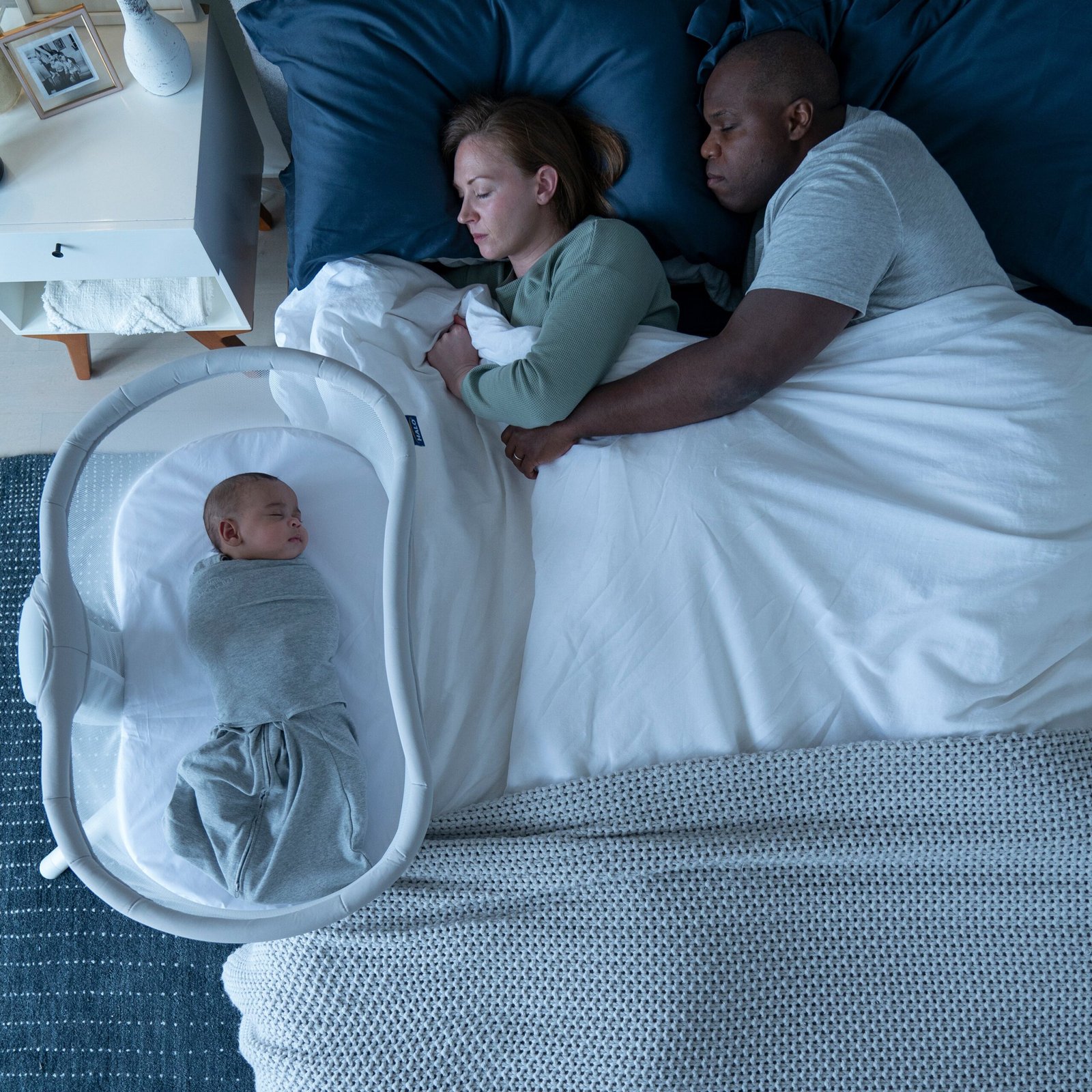
The HALO BassiNest Swivel Sleeper 3.0 is a bedside bassinet whose sleep pod swivels over your mattress and has a side wall that lowers.
Prices are list prices seen at US retailers in 2026 and change often. Check the current price on Amazon before you buy.
A good baby bassinet has a firm, flat mattress, breathable sides, a compliant safety certification, and a height that matches your bed. Everything else is convenience. The table below lists the criteria we used to rank each bassinet in this guide.
This is the mandatory US bassinet standard for products made on or after February 21, 2026 (CPSC via Bureau Veritas, 2025).
The standard limits the head-to-toe incline to 10 degrees or less when the bassinet is at rest (SGS, 2025).
The American Academy of Pediatrics (AAP) says babies should sleep on a firm, flat surface with nothing else in the sleep space (AAP, 2022).
Some cantilevered (one-sided base) bassinets have been reported to tilt sideways, which can roll a baby toward the wall (Consumer Reports, 2025).
A bedside sleeper only works if its mattress lines up with yours, so measure from the floor to the top of your mattress first.
Over-bed models such as the HALO need at least 4.5 inches of space under the bed frame for the legs to slide under (Babylist, 2026).
Limits in this guide range from 18 lbs to 33 lbs, and a higher limit can add weeks or months of use.
A longer mattress means a tall baby will not outgrow the bassinet by length before weight.
A lowering wall or swivel base makes a real difference after a C-section or during frequent breastfeeding.
Mesh walls let air move freely and let you see your baby from bed.
Spit-up and diaper leaks happen nightly, so a removable, machine-washable cover saves time.
Motion and white noise features help some babies resettle, but no one can predict which babies will respond.
Folding or lightweight frames let you move the bassinet between rooms or take it to grandparents' houses.
Some models assemble in minutes, while heavy smart cribs can need two adults.
A bassinet is used for roughly 4-6 months, so a $300 bassinet costs about $50-$75 per month of use.
Renting a smart bassinet or buying a model with good resale value cuts the real cost.
The federal bassinet standard changed on February 21, 2026. The Consumer Product Safety Commission (CPSC) adopted ASTM F2194-25 as the mandatory rule under 16 CFR 1218, and it applies to bassinets and cradles made on or after that date (Bureau Veritas, 2025).
The 2025 version adds requirements for height, stability, and rigidity, plus safety rules for battery-powered and electric bassinets (SGS, 2025).
That matters if you plan to buy a replacement or "upgrade" bassinet mattress separately. In most cases, the safest choice is to use only the mattress that came with the bassinet.
If you buy a used bassinet, look up the exact model at CPSC Recalls before your baby sleeps in it.
Each review below covers who the bassinet suits, what it costs, its real trade-offs, and the parents who should skip it.
The HALO BassiNest Swivel Sleeper 3.0 is a bedside bassinet whose sleep pod swivels over your mattress and has a side wall that lowers. It is our top pick because it solves the hardest part of the newborn months: reaching your baby at 3 a.m.
The swivel lets you pull the bassinet over your mattress, lift your baby, and put them back without sitting all the way up. After a C-section, that one motion replaces a painful twist-and-stand routine several times a night.
The 3.0 generation has a four-leg base that is over 30% lighter than the original but just as sturdy, according to HALO’s product listing (Strolleria, 2026). The legs slide under bed frames with at least 4.5 inches of clearance.
The bed section detaches with a push button. HALO says the detached nest is only for awake, supervised use on the floor, not for sleep (Babylist, 2026). Treat it as a play space, not a second bassinet.
Do not confuse this model with the HALO BassiNest Flex Portable. Consumer Reports asked the CPSC to recall the Flex in January 2024 and again in March 2025 after finding it tilts to one side in lab tests (Consumer Reports, 2025). HALO denies a defect and has not recalled it.
Weight limit is 20 lbs or 5 months, whichever comes first, and you must stop sooner if your baby pushes up on hands and knees (Bambi Baby, 2026).
C-section recovery, breastfeeding parents, and anyone who wants the easiest nighttime access without smart features.
Small bedrooms, low platform beds, or parents who want a bassinet they can fold and travel with.
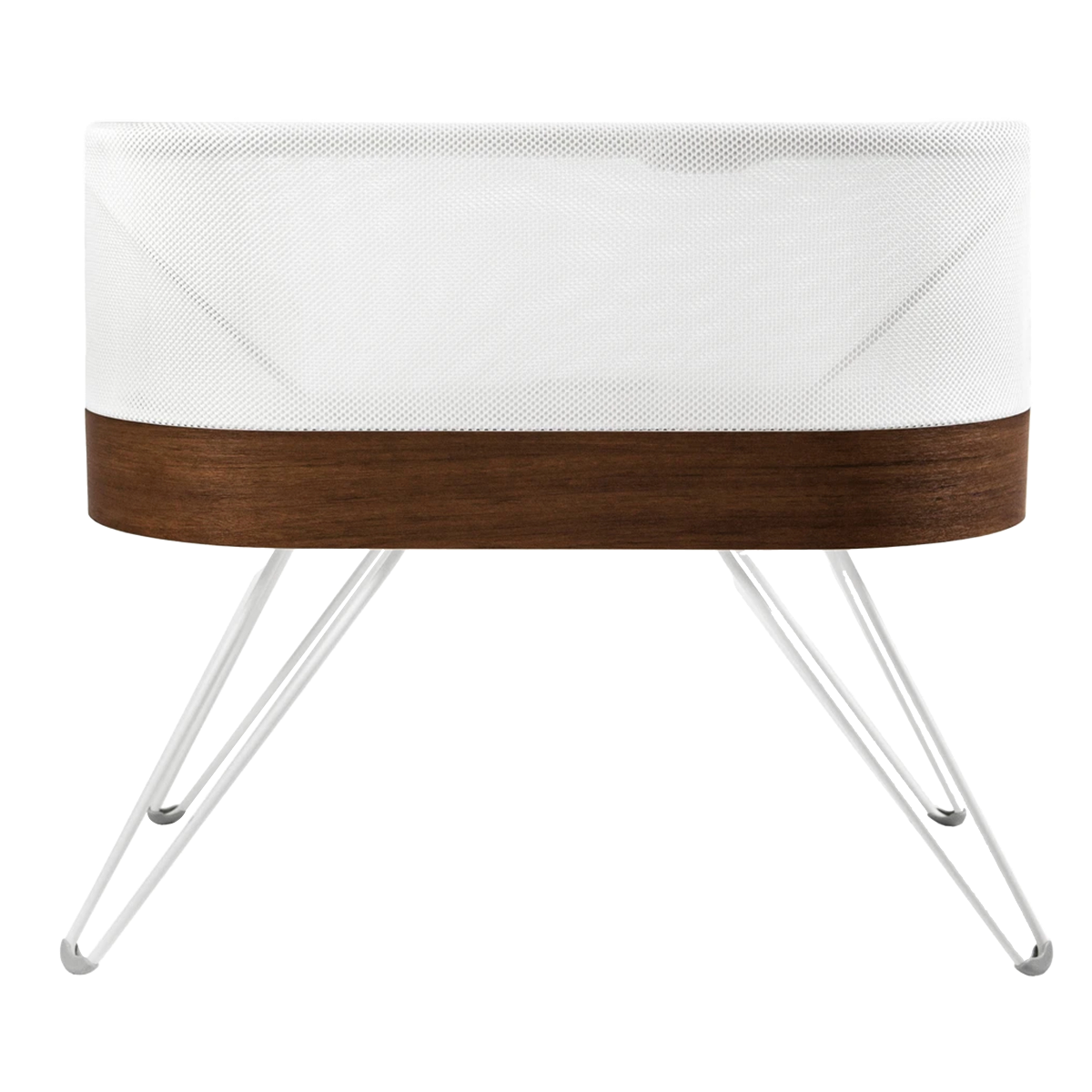
The SNOO Smart Sleeper is a standalone bassinet that senses fussing and responds with rocking and white noise. It is the best smart bassinet because it is the only one with FDA De Novo authorization for keeping sleeping babies on their backs (Happiest Baby, 2026).
The SNOO’s main job is resettling. When your baby stirs, it starts with gentle motion and sound and steps up from there, often before you are fully awake. For parents who wake at every whimper, that buffer can protect hours of sleep.
The clip-in sleep sack is the safety feature most parents care about. FDA De Novo authorization means the agency reviewed the SNOO as a new type of medical device for keeping babies on their backs (Happiest Baby, 2026). It is meant for babies from birth to 6 months.
The sleep sacks are sized S (5-12 lbs), M (12-18 lbs), and L (18-25 lbs), so the practical limit is about 25 lbs. Stop using it at 6 months or when your baby can push up on hands and knees, whichever comes first (Happiest Baby, 2026).
Renting is the smarter move for most families. Five months at $159 is about $795, less than half the purchase price, and you can return it if your baby does not settle in it. Some employers offer a free 6-month rental as a benefit, so check yours first (Happiest Baby, 2026).
Parents who want automatic soothing and can rent or afford it, especially if one parent returns to work early.
Budget buyers, small rooms (it weighs about 38 lbs), or parents who want over-bed access for nursing.
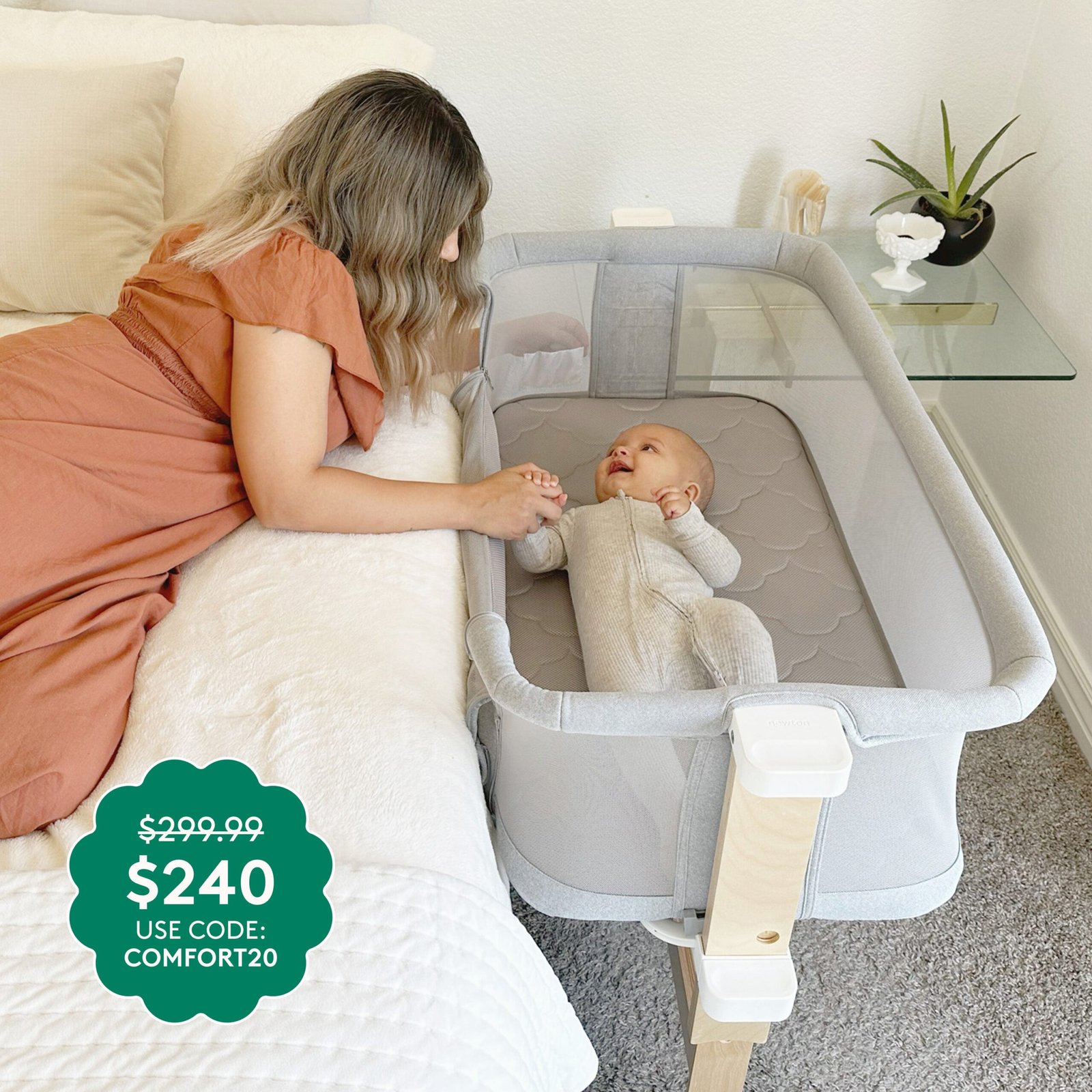
The Newton Baby Bassinet is a wood-frame bassinet with a mattress you can wash from cover to core. It is the pick for parents whose top concern is airflow at the sleep surface.
Most bassinet mattresses use foam. The Newton uses a woven polymer web that air passes through, which the company says reduces suffocation and overheating risk. If your baby ends up face-down against the mattress, they can still breathe through it.
Washing is where the Newton stands apart. You can hose down the core after a blowout instead of spot-cleaning foam and hoping it dries. The fabric and mesh sides also come off for the washing machine (Babylist, 2026).
The infant-access opening lets the Newton work as a bedside sleeper. Its eight height settings cover 26 to 31.75 inches, which suits most standard beds, but parents with very low beds should measure first.
The bassinet itself is light at about 15 lbs, so moving it from the bedroom to the living room for naps takes one hand. Newton also offers a 2-year mattress warranty and a 1-year frame warranty.
Parents focused on mattress breathability and easy cleaning.
Parents who need a swivel for C-section recovery or a bassinet for very low or very high beds.
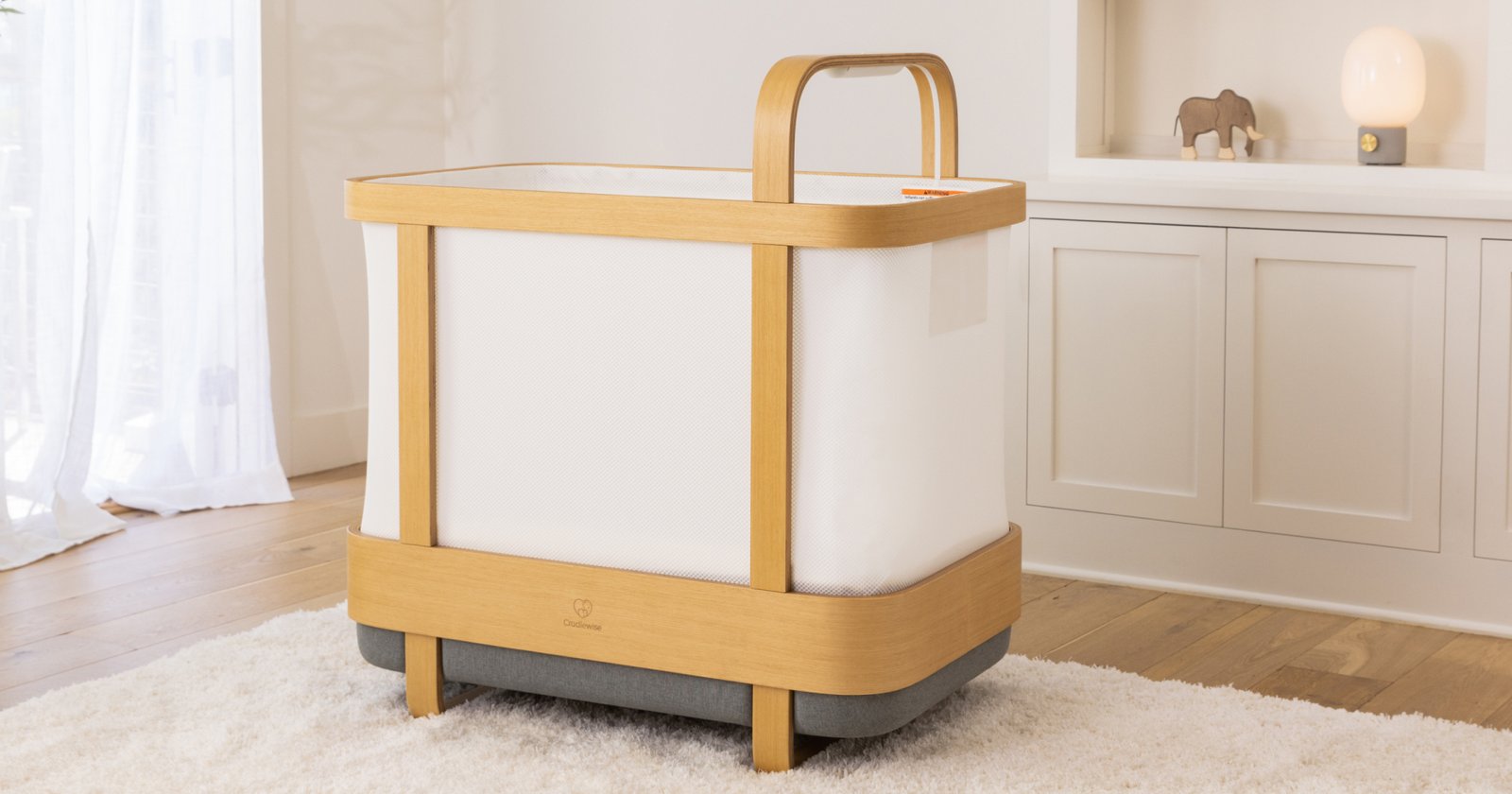
The Cradlewise Smart Crib is a bassinet that turns into a crib and includes a built-in baby monitor. It is the only pick here that lasts past the newborn stage, from birth to about 24 months or 33 lbs (Cradlewise, 2026).
The Cradlewise watches for early wake signs, such as movement and eye-opening, and starts a gentle bounce before your baby fully wakes. The goal is to catch the stir before it turns into a cry.
Because it becomes a crib, you skip the bassinet-to-crib purchase and the move to a new sleep space. Cradlewise suggests switching to crib mode around 5 months, at 18 lbs, or when your baby pushes up on hands and knees (Gearbrain, 2024).
The built-in monitor also replaces a separate baby monitor, which can save $100 to $300. If you were already planning to buy a premium monitor, the real price gap with a SNOO shrinks.
The trade-off is size and weight. The unit weighs about 88 lbs, and testers at The Bump describe assembly as hard work (The Bump, 2026). Once it is set up, it stays where it is.
Parents who want smart soothing and a crib in one purchase, and who have a dedicated spot in the bedroom.
Small apartments, families who move rooms often, or anyone on a budget.
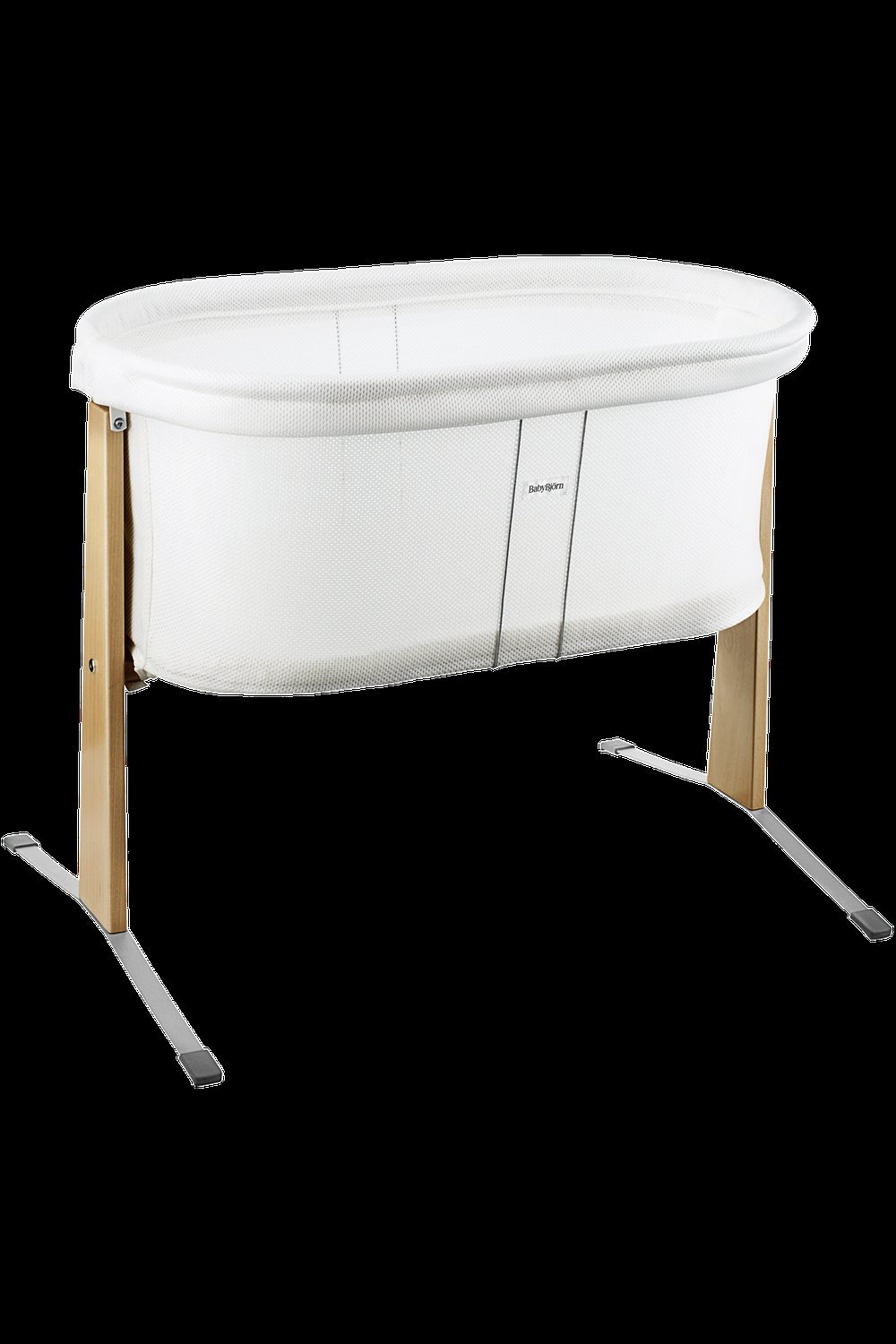
The BabyBjörn Cradle is a compact, lightweight bassinet with a gentle springy rocking motion and no electronics. It is the best choice for small bedrooms and parents who want a simple product with nothing to charge or update.
The rocking comes from the cradle’s own spring. It moves with your baby’s movements or a light push from you, similar to the motion of a stroller. There is no motor, so there is nothing to break or squeak.
At 13 lbs, the cradle moves from the bedroom at night to the living room by day with one hand. Folded, it slides under a bed or into a closet, which matters in apartments with no spare room.
The mesh fabric lets your baby breathe even if their face presses against the side, according to BabyBjörn. It also gives you a clear view from across the room.
The real limit is size. The weight limit is 18 lbs, and the mattress is only 28 inches long. Several Babylist reviewers say larger babies outgrew it around 3 months (Babylist, 2026).
Small apartments, minimalist parents, and families who move the bassinet between rooms daily.
Parents expecting a large baby or anyone who wants side-of-bed access for nursing.
The Mika Micky Bedside Sleeper is a bassinet that straps to the side of your bed and has a side panel that lowers. It is the best value bedside sleeper and the best pick for high beds in this guide.
The drop side and bed straps create the bedside setup many parents want for breastfeeding. Your baby sleeps in their own space, level with your mattress, so you can reach over without getting up.
Its 33 lb weight limit is one of the highest on the market (Real Homes, 2026). In practice, most babies will still need to move out once they can push up on hands and knees, but you will not hit the weight cap early.
The height range tops out at 26 inch beds, which covers many taller mattresses that rule out other bedside sleepers. Measure from the floor to the top of your mattress before ordering.
The wheels with brakes make it easy to roll the sleeper away from the bed for daytime naps and lock it back in place at night.
Budget-conscious parents, breastfeeding parents, and families with high beds.
Parents who want a portable bassinet for travel or a swivel for post-surgery recovery.
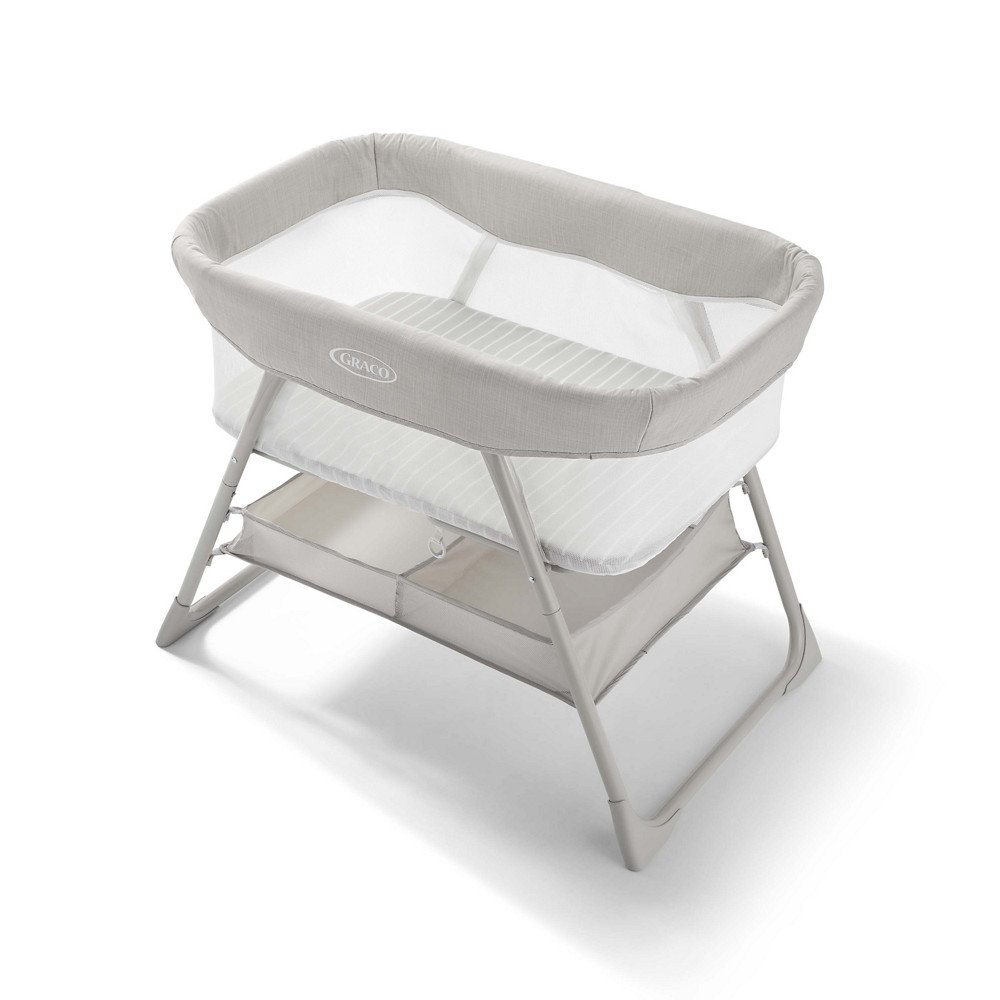
The Graco DreamMore is a lightweight bassinet that folds for storage and travel. It is the best budget pick when you need a safe sleep space at home and a second one for trips or grandparents’ houses.
The DreamMore has the two things every bassinet needs: a firm, flat mattress and breathable sides. Everything else is extra, and the DreamMore keeps the extras simple.
The 2-in-1 version lifts off its legs to become a smaller portable bassinet with carry handles. That makes it easy to keep your baby nearby in any room, then fold it flat for a weekend away.
The weight limit is 20 lbs, the same as the HALO and Newton (Canadian Tire, 2026). Stop using it once your baby pushes up on hands and knees.
Graco sells several DreamMore variations with different features. Compare the exact model name on the listing before you buy, since the bedside, 2-in-1, and 3-in-1 versions differ in size and price.
Budget buyers, frequent travelers, and families who need a second bassinet.
Parents who want a lowering wall, a swivel, or a breathe-through mattress.
You do not need a bassinet. A crib is safe from day one, and the AAP only asks that your baby sleep in your room on a separate surface, ideally for at least the first 6 months (AAP, 2022). A bassinet is a convenience for the newborn months.
A bassinet is a small standalone infant bed. A bedside sleeper (also called a co-sleeper) is a type of bassinet with a side that lowers so it sits level with your mattress. A crib is a larger bed used from birth through toddlerhood.
The AAP says room-sharing without bed-sharing can lower the risk of sudden infant death syndrome (SIDS) by as much as 50% (AAP, 2022). Bedside sleepers keep the baby close while still giving them their own sleep surface.
If your bedroom fits a crib, putting the crib there for the first 6 months is a safe way to skip the bassinet cost entirely. See our Best Baby Cribs guide for options.
Older models may predate the 2026 standard or may have been recalled, so search the model at cpsc.gov before using it.
Many bedside sleepers top out at 26-30 inches, so measure your mattress height before you order.
Extra padding makes the surface softer and less safe, so use only the mattress that came with the bassinet.
The HALO BassiNest Flex Portable and the Swivel Sleeper 3.0 are different products, so confirm the exact model on the listing.
If you are unsure your baby will respond to motion, rent the SNOO first instead of paying $1,695.
The safest baby bassinet is one made to the current ASTM F2194-25 standard, used with its original firm, flat mattress, and kept free of blankets and pillows. Among our picks, the SNOO adds a clip-in sleep sack that keeps babies on their backs, which earned FDA De Novo authorization (Happiest Baby, 2026).
Most babies sleep in a bassinet for 4 to 6 months. Move your baby out when they reach the weight limit or start pushing up on hands and knees, whichever comes first. Bassinets with higher limits, such as the Mika Micky at 33 lbs, can last a bit longer.
Renting the SNOO is worth it if you want to test automatic soothing without paying $1,695. At $159 per month, five months costs about $795 (Happiest Baby, 2026). If your baby does not settle in it, you can return it after the minimum rental period.
A bassinet is a standalone small bed for newborns. A bedside sleeper is a bassinet with a side that lowers and sits flush against your mattress. The HALO 3.0, Newton, and Mika Micky all work as bedside sleepers, and none of them count as bed-sharing.
No, you do not need both. A crib is safe from birth, and placing it in your bedroom meets the AAP room-sharing guidance (AAP, 2022). Parents buy a bassinet mainly because it is smaller and easier to reach from bed.
The HALO BassiNest Swivel Sleeper 3.0 is the best bassinet after a C-section. Its swivel brings your baby over your mattress, and its lowering wall lets you lift them without twisting or standing. The Mika Micky is a lower-cost bedside option, though it does not swivel.
Consumer Reports advises parents not to buy or use the HALO BassiNest Flex Portable because its cantilevered base tilted to one side in lab tests (Consumer Reports, 2025). HALO says the product is safe when used as directed and has not recalled it.
The HALO BassiNest Swivel Sleeper 3.0 is the best baby bassinet for most families in 2026. It makes night feeds and C-section recovery easier at a price that fits a product you will use for about 5 months.
If you want automatic soothing, rent the SNOO before you consider buying. If budget comes first, the Mika Micky Bedside Sleeper gives you a bedside setup and a 33 lb weight limit for a fraction of the HALO’s price. For more low-cost options, see our Best Bassinets Under $100 guide.