
#1 · Best overall
Price
$79.99
Standout Detail
CPSC compliant label, organic cotton, travel bag

As an Amazon Associate, Parents Love Best earns from qualifying purchases. Learn more
We compared the 10 best baby nests on safety compliance, fabric, washability and portability, so you can pick one for supervised awake time.
The Snuggle Me Organic Infant Lounger is the best baby nest for most families because it combines a CPSC-compliant label, an organic cotton cover and fully published specs.
The table below compares all 10 baby nests side by side. Prices were checked on Amazon on October 6, 2026 and change often, so check the current listing before you buy.

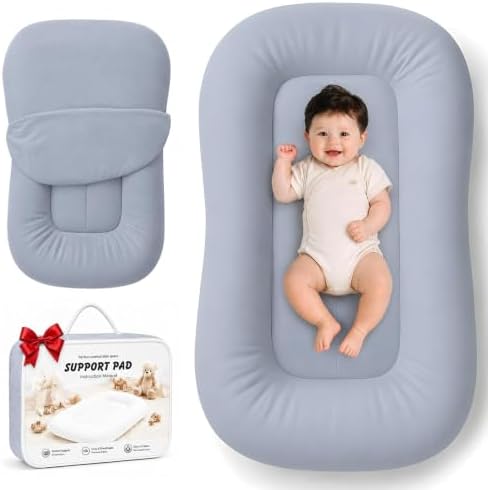


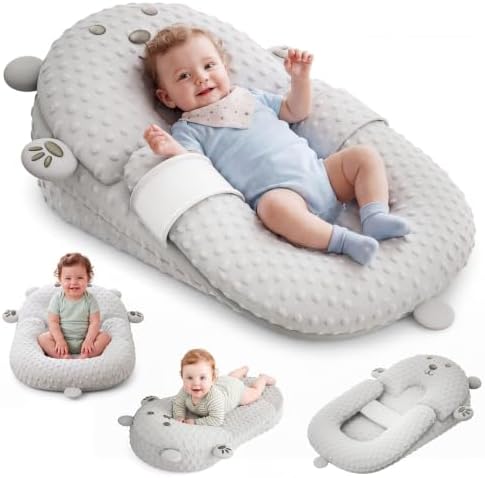

A baby nest (also called a baby lounger or infant support cushion) is a padded, low-sided cushion that gives a newborn a defined spot to lie on the floor while an adult watches.
A soft, defined spot on the floor for short tummy time sessions.
A quick, contained place to change your baby on the floor.
A cozy base for awake play while you stay close by.
Brief awake rests in a shared room, always with an adult watching.
The CPSC says infant support cushions should never be used for infant sleep or naps, and only on the floor. Most deaths linked to these products happened when they were used in or on a sleep product such as an adult bed, crib or couch. Every product in this guide is reviewed on that basis.
In this article, "baby nest" is the term used for all 10 products, even when the Amazon listing says "lounger" or "support cushion".
The best baby nest is firm, flat, low-sided, made after May 2025 and easy to wash. We used the 16 criteria below to compare every product on this list.
Products made after this date must meet the federal infant support cushion rule, 16 CFR 1243 (CPSC, 2024).
The rule sets a minimum firmness so a baby's face cannot sink into the padding (CPSC, 2024).
Inclined surfaces can tip a baby's chin toward the chest and restrict breathing. The rule caps incline at 10 degrees (CPSC, 2024).
Walls must angle away from the baby at more than 90 degrees, so a baby who rolls does not press into a vertical bumper (CPSC, 2024).
Straps are banned on infant support cushions under the federal rule (CPSC, 2024).
A compliant product carries a sewn-in label with the maker's name, U.S. contact details and manufacture date.
Spit-up and diaper leaks happen daily. A zip-off cover saves you from hand-washing foam.
A second cover means the baby nest stays usable while one cover is in the wash.
Cotton and muslin covers feel cooler against a newborn's skin than polyester.
Organic cotton is grown without synthetic pesticides, which some parents prefer for skin contact.
Longer models (around 32 inches) give a growing baby more space before they outgrow it.
A baby nest under 3 pounds is easy to carry from room to room.
Low sides make it easier to see your baby's face at all times.
Many listings say 0-24 months, but most babies outgrow safe use once they start rolling.
Avoid listings that use words like "sleeper" or "co-sleeper". Consumer Reports calls this language a warning sign (Consumer Reports, 2026).
A brand with a website, published specs and a U.S. contact is easier to reach if a recall happens.
A baby nest is safe only when your baby is awake, on the floor and watched by an adult. If your baby falls asleep in it, move them right away to a crib, bassinet or play yard with a firm, flat mattress (Consumer Reports, 2026).
The CPSC links at least 79 infant deaths and 124 injuries to infant support cushions from 2010 to 2022, most involving babies under 3 months old (Consumer Reports, 2025).
A CDC review of 1,685 sudden unexpected infant deaths in Georgia (2013-2022) found a nursing pillow in 84 cases, and 86% of those babies were under 4 months old (CDC, 2025).
Consumer Reports counted three lounger-related deaths reported to the CPSC in 2025 and another in February 2026 (Consumer Reports, 2026).
Floor only. Never put it on a bed, sofa, table or counter.
Stay in the room. Keep your baby’s face in view the whole time.
Keep it empty. No blankets, pillows or toys inside the baby nest.
Never in a crib or bed. Do not place a baby nest inside a crib, bassinet or adult bed.
Stop at rolling. Stop using it once your baby starts rolling, even if the listing says 0-24 months.
Check the label. Look for a manufacture date after May 5, 2025.
The federal rule has helped, but it does not clean up every listing. The CPSC removed more than 106,000 unsafe product listings from online marketplaces in 2026, up from 67,647 in 2025 (Consumer Reports, 2026).
Below are detailed reviews of each baby nest, ranked by safety transparency, build and everyday usefulness. Specs come from brand pages and Amazon listings as of September 2026.
The Snuggle Me Organic Infant Lounger is the best baby nest for most families because it combines a CPSC-compliant label, an organic cotton cover and fully published specs. It is the benchmark the other nine products are measured against.
Snuggle Me Organic is the only brand on this list that publishes dimensions, fill material, weight and wash instructions on its own website. That matters if you ever need to check a recall notice or contact the maker. The Amazon listing states the Curve model is CPSC compliant.
The Curve design sits low. At 1.9 inches tall, the sides are short enough that you can see your baby’s face from a standing position. That low profile fits the federal rule’s intent of keeping side walls from acting like bumpers.
The brand’s own guidance is clear and conservative. It says to stop use once your baby starts rolling and to use the lounger only on firm floors under direct supervision (Snuggle Me Organic, 2026). Few competitors give parents that level of instruction.
The included travel bag is useful for grandparents’ houses. The baby nest weighs under 2 pounds, so carrying it between rooms or packing it for a trip is easy.
Parents who want the most transparent, safety-documented baby nest available.
Families on a tight budget or looking for a spare cover in the box.
The Mapotf Baby Lounger is a cotton infant support cushion sold with its cover, built for tummy time and supervised floor play. It is a strong mid-range pick for parents who want a larger surface than the Snuggle Me.
The Mapotf listing leads with tummy time and play rather than sleep. That is the right way to market a baby nest, and it is a good signal compared to listings that use sleep words in the title.
At roughly 32 inches long, the Mapotf gives a newborn more length than the 29.5-inch Snuggle Me. That extra space helps during diaper changes, when you need room to lay out a wipe and a fresh diaper beside your baby.
The Dusty Rose color is a soft, muted pink that fits most nursery palettes. Mapotf sells the same design in Cloud White, Blue and Navy, so you can match your room without changing the product.
The cover comes included and is sold as part of the package. Before buying, check the listing for the manufacture date and a sewn-in warning label, since Mapotf does not publish a separate spec sheet.
Parents who want a roomy baby nest for tummy time and diaper changes.
Buyers who want a CPSC compliance statement in the product title.
The Navy Blue Mapotf is the same cotton baby nest as the Dusty Rose model, in a darker shade. It is the practical choice for parents who want a baby nest that still looks clean between washes.
The main reason to pick Navy Blue over Dusty Rose is maintenance. Formula, spit-up and drool leave faint marks that show quickly on white and pink fabric. A dark navy cover hides light marks between washes.
That makes this color a good fit for a baby nest that lives on the living room floor or travels to daycare drop-off and family visits. You still need to wash it regularly, but it looks tidier in the meantime.
Navy is also a gender-neutral gift option that pairs with gray, white and wood-tone nurseries. If you are buying for a baby shower and do not know the nursery theme, it is a safe choice.
Everything else matches the Dusty Rose version, including size, cotton fabric and the included cover. The same buying advice applies: confirm the manufacture date on the label when it arrives.
Busy households that want a baby nest that looks clean longer.
Parents who prefer light nursery colors.
The ZUKAMINI baby nest is an extra-large muslin lounger that ships with one lounger and one spare cover. That second cover is the main reason it ranks high on this list.
A spare cover solves the most common complaint about baby nests. When one cover goes into the wash after a blowout, the second one goes straight on, so you are never without a clean surface.
Muslin is a loose-weave cotton that breathes well and softens with every wash. It is a good match for warm homes or summer babies who get sweaty during tummy time.
The extra-large size gives a newborn space to stretch and kick. Parents of long babies often find compact baby nests feel cramped by 2 or 3 months, and a larger surface delays that point.
ZUKAMINI markets this product for tummy time and home or travel use. As with every baby nest, the bigger size is not a reason to use it longer for sleep. Move your baby to a crib once they doze off.
Parents who want a backup cover and a larger play surface.
Small apartments or frequent travelers who need a compact baby nest.

The BUTOA Baby Lounger is a lightweight, portable infant support cushion built for moving between home and travel. Its main strength is how easy it is to take with you.
BUTOA designs this baby nest around portability. The listing calls it lightweight and portable, and it is positioned for use at home, at relatives’ houses and on trips where you need a clean spot for your baby on the floor.
BUTOA has several versions of this lounger on Amazon, including models advertised as double-sided with a washable cover. Check the exact listing you buy from, since features vary between colors and versions.
Having a familiar surface helps some babies settle during awake time in a new place. A baby nest from home gives them the same texture and shape at a hotel or grandparent’s house.
The listing positions it as a tummy time lounger. That fits safe use: floor only, adult present, and a move to a travel crib or play yard when your baby gets sleepy.
Families who travel often or split time between two homes.
Parents who want one clear, fully documented spec sheet.
The Lucakuins baby nest uses what the brand calls a “bionic design”, a curved shape meant to support a newborn’s neck and back. It is sold in soft organic cotton in many colors.
The contoured shape is the main difference between Lucakuins and flatter pads on this list. The curve gives a newborn a defined spot, which some parents like during short supervised rests beside them on the floor.
Lucakuins offers this baby nest in a wide range of colors, including pink, blue, gray, white, cream gray and two greens. That makes it easy to find a shade for a gift or a themed nursery.
The current listing title uses “supervised use” and “infant floor seat and loungers” language. Older versions of the URL and title include the words “snuggle sleeper”. Ignore that wording. Consumer Reports flags sleep language on lounger listings as a warning sign (Consumer Reports, 2026).
Because the shape is curved, check that the product you receive has a flat base and side walls that slope outward. The federal rule caps the incline at 10 degrees (CPSC, 2024).
Parents who want a curved baby nest in a specific color.
Buyers who want a flat pad for tummy time.
This infant support cushion is a plain, cotton baby nest with the cover included, labeled for supervised use. It is a simple option for parents who want a basic floor cushion.
The product title puts “supervised use” up front. That is exactly how a baby nest should be marketed, and it is a good sign next to listings that lean on sleep language.
The GrayishBlue color is a calm, neutral shade. The same design is also sold in white and pink, so you can pick a color that suits your space.
This baby nest keeps things simple: a cotton cushion, a cover and a portable size for home and travel. There are no extra modes or add-ons to figure out.
The trade-off is transparency. The listing does not name a well-known brand with a public spec sheet, so check the sewn-in label for the maker’s U.S. contact details and a manufacture date after May 5, 2025.
Parents who want a basic cotton baby nest for floor time.
Buyers who want a recognizable brand with support.
The Joehea Baby Lounger is a dual-function baby nest with a removable, machine-washable pad. Its focus is on quick cleanup for parents who want to throw the whole pad in the wash.
Joehea’s selling point is the removable pad. Instead of only unzipping a thin outer cover, the listing says the pad itself comes out and goes in the washing machine.
That design is helpful for parents who deal with frequent spit-up or leaky diapers. Less scrubbing means the baby nest stays cleaner with less effort.
At about 2.18 pounds, it is light enough to carry between rooms. The gray color is neutral and hides everyday marks better than white.
The listing describes it as dual-function but does not explain the two uses in detail. Read the manual when it arrives and follow the maker’s guidance on which configuration to use for floor time.
Parents who want the easiest possible cleanup.
Buyers who want detailed specs before buying.
The WOLIOS baby support pillow combines a nursing pillow, a baby lounger and a tummy time mat, with a detachable, washable cover. It suits parents who want one item for feeding and floor time.
The main advantage is fewer products. A single pillow supports your arms during breastfeeding or bottle feeding, then props your baby’s chest during tummy time.
For tummy time, a small roll under the chest helps newborns lift their head. The WOLIOS pillow can fill that role while you sit on the floor with your baby.
Use extra care with this style of product. A CDC review found nursing pillows present in 84 sudden unexpected infant deaths in Georgia from 2013 to 2022, nearly all involving bed sharing (CDC, 2025). The AAP says nursing pillows must never be used for sleep (HealthyChildren.org, 2026).
When a feed ends and your baby is drowsy, move them to a crib or bassinet. Never leave a baby propped on this pillow, on a couch or in an adult bed.
Breastfeeding parents who want one product for feeding and tummy time.
Anyone who might nap with the baby on the pillow.
The 3-in-1 Baby Cotton Carry Nest is a soft, lightweight, washable cotton carrier that lets you move a newborn from room to room. It is the most different product on this list and needs the most caution.
Carry nests like this one are popular in South Asia, where similar models from brands such as LuvLap and Mee Mee are sold as a bed, sleeping bag and carry nest in one. The appeal is simple: you can lift a sleepy newborn without waking them.
The cotton fabric is soft and fully washable, which makes cleanup easy. It is also very light, so it folds into a diaper bag for visits.
The problem is the sleep use. In the U.S., the AAP advises against sleep nests and says babies should sleep alone on a firm, flat surface (HealthyChildren.org, 2026). Many 3-in-1 carry nests are marketed for co-sleeping, which you should not do.
Use this carry nest only to move your baby short distances while awake and watched. Check the label for a U.S. contact and a manufacture date after May 5, 2025, since this product type may not be designed to the federal infant support cushion rule.
Short, supervised transfers between rooms.
Sleep of any kind, bed sharing or unsupervised use.
The right baby nest depends on where you will use it and how much documentation you want. Start with safety compliance, then choose on size, washability and budget.
Choose the Snuggle Me Organic. It has a brand site, published specs and a CPSC compliance statement.
The WOLIOS covers both jobs, as long as nobody naps with it.
Check the label for a manufacture date after May 5, 2025, and stop using the baby nest once your baby starts to roll.
The Snuggle Me Organic Infant Lounger is the best baby nest for a newborn. It is labeled CPSC compliant, uses an organic cotton cover and has a low 1.9-inch profile that keeps your baby’s face in view.
No. The AAP says infants have suffocated while sleeping on loungers and that they should be used only during supervised waking hours (HealthyChildren.org, 2026). If your baby falls asleep, move them to a crib, bassinet or play yard.
There is no real difference. “Baby nest”, “baby lounger” and “infant support cushion” are names for the same padded floor product. The CPSC uses the term infant support cushion in its 2024 safety rule.
Most babies should stop using a baby nest once they start rolling, often around 4 to 6 months. Many Amazon listings say 0-24 months, but Snuggle Me Organic recommends stopping at the first sign of rolling (Snuggle Me Organic, 2026).
The rule applies to products made after May 5, 2025. It requires a firm surface, an incline of 10 degrees or less, side walls that slope outward, no restraints and permanent warning labels (CPSC, 2024).
No. A baby nest belongs on the floor only. Placing it on a bed, sofa or inside a crib adds a fall risk and turns it into soft bedding, which the AAP advises against (HealthyChildren.org, 2026).
Remove the cover and machine wash it on a gentle cycle with a dye-free detergent, then air dry flat. Most foam inserts cannot be washed, so check the care label before putting the whole product in the machine (Snuggle Me Organic, 2026).
The Snuggle Me Organic Infant Lounger (Birch) is the best baby nest for most families because it is the most transparent product on this list, with a CPSC compliance label, published specs and clear safety guidance. If you want a larger surface and a lower-profile brand, the Mapotf Baby Lounger (Dusty Rose) is a strong runner-up for tummy time, and the ZUKAMINI is the pick for parents who want a spare cover. Use any of them on the floor, with your eyes on your baby, and never for sleep.