
How to Deep Clean a Nursery Rug: A Step by Step Guide
- Published September 7, 2026
- Updated October 12, 2026
- 8 min read
Deep cleaning a nursery rug takes 3-5 hours including dry time, and most rugs can be cleaned at home without professional help.
Vacuum, deodorize with baking soda, spot-treat with fragrance-free soap or diluted vinegar, then dry the rug flat out of direct sun.
TL;DR: The Quick Answer
- Deep cleaning a nursery rug takes 3-5 hours including dry time, and most rugs can be cleaned at home without professional help.
- Vacuum first, spot-treat stains with a baby-safe cleaner, hand-scrub with mild dish soap or white vinegar solution, then air dry flat.
- Never put a nursery rug in a machine washer unless the care label explicitly says it is machine washable.
- Baking soda is the safest deodorizer for a baby’s room – leave it on for 30 minutes before vacuuming.
- Clean nursery rugs every 1-3 months, or immediately after any spit-up, diaper leak, or formula spill.
- What You Need Before You Start
- Step 1: Check the Care Label Before Anything
- Step 2: Take the Rug Outside
- Step 3: Apply Baking Soda and Let It Sit
- Step 4: Mix Your Cleaning Solution
- Step 5: Spot-Treat Stains First
- Step 6: Hand-Scrub the Full Rug Surface
- Step 7: Remove Excess Water and Dry Flat
- How Often to Deep Clean a Nursery Rug
- Common Problems and How to Fix Them
- FAQ
- Summary
What You Need Before You Start
Vacuum cleaner with upholstery or crevice attachment
Baby-safe dish soap (fragrance-free, dye-free), such as Dawn Free & Clear, or white distilled vinegar
Baking soda
Two clean microfiber cloths or a soft-bristle scrub brush
Cold water
A clean outdoor space or bathtub large enough to lay the rug flat
Fan or open windows for air circulation during drying
Good to know
What to avoid: Enzyme cleaners, bleach, strongly scented fabric sprays, or steam cleaners on wool or jute rugs. Many enzyme cleaners marketed as baby-safe contain fragrances that linger in fibers.
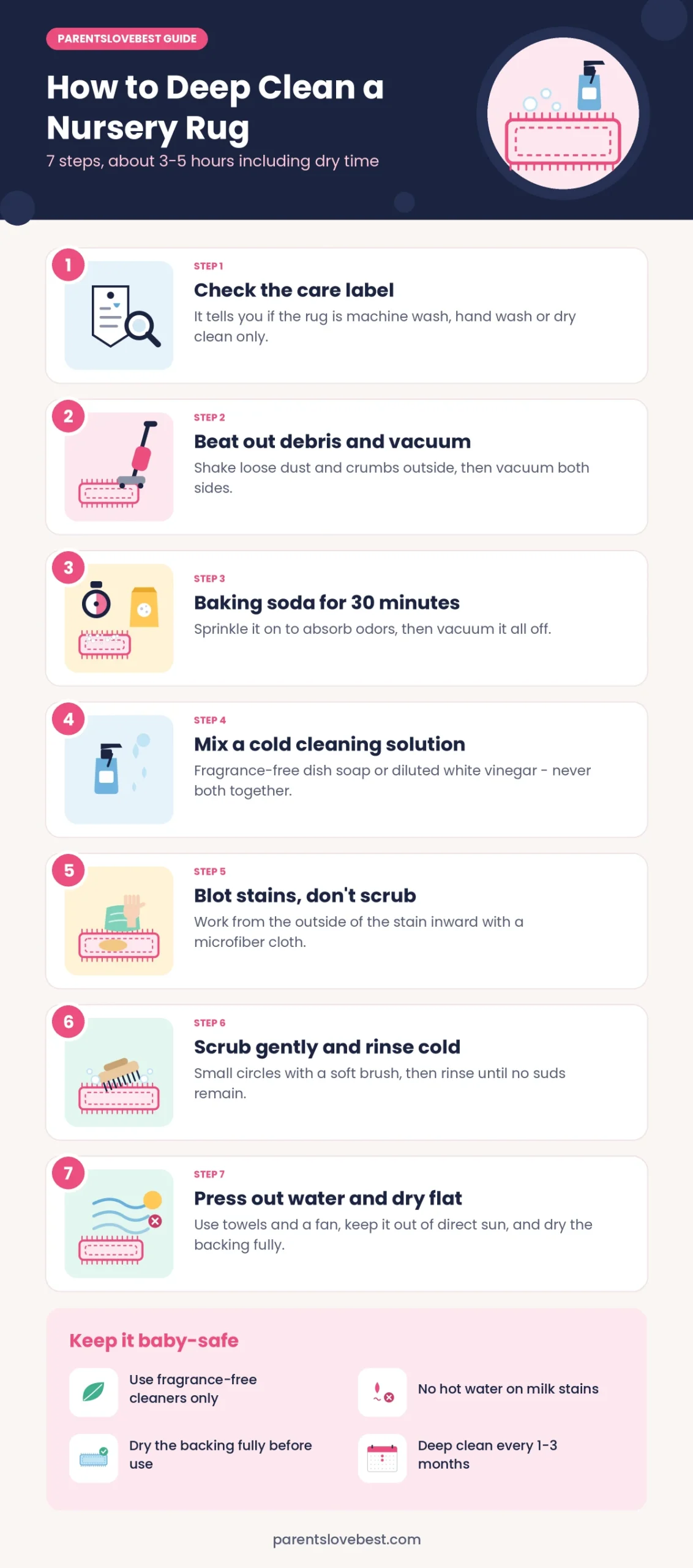
How to Deep Clean a Nursery Rug: The 7 Steps at a Glance
Step 1: Check the Care Label Before Anything Else
Turn the rug over and read the care label. This step takes 30 seconds and prevents permanent damage.
Machine washable symbol
You can machine wash on cold, gentle cycle. Skip to Step 4 after washing.
Hand wash only
Follow Steps 2-6 below.
Dry clean only
Do not attempt this at home. Take it to a cleaner and request solvent-free, fragrance-free cleaning.
No label
Treat it as hand wash only to be safe.
Good to know
Most nursery rugs - especially wool, jute, cotton shag, and memory foam-backed rugs - are hand wash only even if they feel durable.
Step 2: Take the Rug Outside and Beat Out Loose Debris
Lay the rug face-down on a clean outdoor surface or hang it over a railing. Beat it firmly with your hand or a clean broom handle for 1-2 minutes.
This knocks out dry debris, dust mites, and dried crumbs that vacuuming alone misses
Especially in thick-pile rugs. If you skip this step, you push that debris deeper into the fibers when you add water later.
Bring it back inside and vacuum both sides thoroughly
Use a crevice tool along the edges where debris collects.
Step 3: Apply Baking Soda and Let It Sit
Sprinkle a thin, even layer of baking soda across the entire top surface of the rug.
Leave it for at least 30 minutes
Or up to 2 hours if the rug has a persistent sour smell from spit-up or milk. Baking soda absorbs odor-causing compounds rather than masking them with fragrance, which makes it the correct choice for a room where a baby breathes close to the floor. If you are still setting up that room, see our guide to setting up a nursery in a small room.
Vacuum the baking soda off completely before moving to the next step.
Step 4: Mix Your Cleaning Solution
For most nursery rugs, use one of these two solutions:
Option A – Mild soap solution (best for cotton, synthetic, or polyester rugs)
1 teaspoon fragrance-free dish soap
2 cups cold water
Mix gently in a spray bottle
Option B – Vinegar solution (best for deodorizing or tackling yellowed spots)
1 part white distilled vinegar
2 parts cold water
Mix in a spray bottle
Do not mix soap and vinegar together
They cancel each other out and leave a filmy residue.
Use cold water only. Hot water sets protein-based stains like milk, formula, and vomit permanently into fibers.
Step 5: Spot-Treat Stains First
Before wetting the whole rug, treat any visible stains individually.
Spray your chosen solution directly onto the stain
Let it sit for 3-5 minutes. Then blot - do not scrub - with a clean microfiber cloth, working from the outer edge of the stain inward. Scrubbing spreads the stain and damages fibers.
Repeat until the stain lifts
For dried, set-in stains, you may need 3-4 rounds of spray-and-blot.
Common stains and what works
Milk or formula
Cold water and dish soap solution. Enzyme cleaners work faster but check that the specific product is fragrance-free before using it in a nursery.
Urine
Vinegar solution first to neutralize ammonia, then baking soda once dry.
Avocado or food puree
Lift solids first with a spoon, then dish soap solution.
Step 6: Hand-Scrub the Full Rug Surface
Lay the rug flat in a bathtub or on a clean outdoor surface. Spray or pour your cleaning solution evenly across the rug – wet it thoroughly but do not soak it.
Using a soft-bristle brush or damp microfiber cloth, scrub in small circular motions working from one end to the other. Work the solution into the fibers but avoid saturating the backing, especially on rugs with a rubber or foam base, as these take much longer to dry and can develop mold.
Rinse by pouring cold water over the rug or running a detachable shower head across it until the water runs clear with no soap bubbles. Soap left in the fibers attracts dirt faster after the rug is back in use.
Step 7: Remove Excess Water and Dry Flat
Press – do not wring – excess water out of the rug using clean towels. Wringing distorts the shape of the rug and can damage the backing.
Roll the rug in a dry towel and press down firmly to pull out more moisture. Unroll it and lay it flat in a well-ventilated area out of direct sunlight. Direct sun fades colors and can crack rubber-backed rugs.
Point a fan at the rug or open windows to speed up drying
Most nursery rugs take 4-8 hours to dry fully. Check the underside before putting it back - the backing holds moisture longer than the pile.
Do not put the rug back in the nursery until it is fully dry on both sides.
A damp rug left on a floor can grow mold, which is a health risk for infants. The EPA advises drying wet items within 24-48 hours to prevent mold growth.
Once the rug is dry, put a non-slip rug pad back underneath so it stays flat and does not slide once your baby starts crawling.
How Often to Deep Clean a Nursery Rug
| Situation | Cleaning frequency |
|---|---|
| Standard use (no spills) | Every 1-3 months |
| Crawling baby or frequent floor play | Every 4-6 weeks |
| After any spit-up, diaper leak, or formula spill | Within 24 hours |
| After illness | Immediately |
| Visible staining or odor | As needed, same week |
Good to know
Between deep cleans, vacuum 1-2 times per week and spot-treat spills immediately. Fresh spills take under 5 minutes to treat and prevent the staining that makes deep cleaning harder.
Common Problems and How to Fix Them
| Problem | Likely cause | Solution |
|---|---|---|
| Rug still smells after cleaning | Backing was not dried fully | Dry it for 2 more hours, fan-assisted. Apply baking soda again once dry. |
| Stain came back after drying | Residue wicked up from the backing | Re-wet the area, blot from below with a dry cloth to pull it back out, and dry thoroughly |
| Rug feels stiff after drying | Too much soap left in fibers | Rinse again with cold water only, dry flat |
| Backing is peeling or cracked | Heat or excessive moisture exposure | Avoid machine washing or steam in future. The rug may need replacing. |
| Colors faded | Dried in direct sunlight | Always dry in shade. Fading is permanent. |
Frequently Asked Questions About Cleaning a Nursery Rug
Can I put a nursery rug in the washing machine?
Only if the care label explicitly permits it. Machine washing is safe for most flat-weave cotton, polyester, and small synthetic rugs. Use cold water and a gentle cycle with fragrance-free detergent. Rugs with rubber backing, wool construction, or jute fibers should never go in a machine – the agitation destroys the backing and distorts the shape.
What is the safest cleaner to use in a baby's room?
Fragrance-free dish soap diluted in cold water is the safest general-purpose option. White distilled vinegar diluted with water works well for odor removal. Avoid anything with added fragrance, essential oils, or optical brighteners – infants spend hours with their faces near the floor, on rugs and activity gyms, and absorb chemicals through skin and respiratory exposure. The same fragrance-free approach works for other baby gear, like cleaning a stroller bag.
How do I get urine smell out of a nursery rug?
Spray undiluted white distilled vinegar on the affected area and let it sit for 5 minutes. Blot dry, then sprinkle baking soda over the spot and leave it for 30-60 minutes before vacuuming. Repeat if the smell remains after drying. The vinegar neutralizes the ammonia in urine. Masking the smell with fragrance spray does not remove it.
How long does a nursery rug take to dry after deep cleaning?
Most nursery rugs take 4-8 hours to dry fully when laid flat with good airflow. Thick-pile rugs or those with foam backing can take up to 24 hours. Always check the underside before placing the rug back on the floor – the backing stays damp longer than the surface.
Do I need a professional rug cleaner for a nursery rug?
Most nursery rugs do not need professional cleaning for routine maintenance. Hand cleaning at home, done correctly, removes stains and odors effectively. The exception is rugs labeled “dry clean only” – take those to a professional and specifically ask for fragrance-free, solvent-free cleaning to keep the rug safe for a baby’s environment.
Is steam cleaning safe for nursery rugs?
Steam cleaning works well on synthetic flat-weave rugs but damages wool, jute, and rubber-backed rugs. High heat can also set some stains rather than remove them. If you use a steam cleaner, confirm it is appropriate for your rug’s material and allow extra drying time since steam drives moisture deeper into the fibers than hand-washing does.
Summary
- Check the care label first – it tells you which method is safe for your specific rug.
- Beat and vacuum before adding any liquid to remove dry debris.
- Use baking soda for odor, cold water with fragrance-free dish soap or diluted vinegar for stains.
- Dry the rug flat, away from direct sunlight, and confirm the backing is fully dry before putting it back on the floor.
- Deep clean every 1-3 months and treat spills within 24 hours to prevent staining from setting.