
How to Clean a Stroller Bag: A Step by Step Guide
- Published July 19, 2026
- Updated July 19, 2026
- 6 min read
Most stroller bags can be cleaned in under 30 minutes using mild dish soap, warm water, and a soft brush.
Most stroller bags can be cleaned in under 30 minutes using mild dish soap, warm water, and a soft brush.
TL;DR: The Quick Answer
- Most stroller bags can be cleaned in under 30 minutes using mild dish soap, warm water, and a soft brush.
- This guide covers 6 steps: emptying, spot-treating, hand-washing or machine-washing, rinsing, air-drying, and reassembling.
- Never put a stroller bag in a dryer – heat warps plastic hardware and shrinks fabric.
- A clean stroller bag prevents bacteria and mold buildup, which can transfer to food, bottles, and baby gear stored inside.
- What You Need Before You Start
- Step 1: Empty the Bag
- Step 2: Check the Care Label
- Step 3: Spot-Treat Stains Before Full Washing
- Step 4: Hand-Wash or Machine-Wash the Bag
- Step 5: Rinse Thoroughly
- Step 6: Air-Dry Completely Before Reassembling
- How to Clean the Insulated Lining Specifically
- How Often to Clean a Stroller Bag
- Common Problems and How to Fix Them
- FAQ
- Summary
What You Need Before You Start
Gather these before you begin – stopping mid-clean to hunt for supplies adds time and lets soap dry onto fabric.
Mild dish soap or baby-safe detergent (fragrance-free preferred)
Two microfiber cloths or soft sponges
A soft-bristle brush (an old toothbrush works for tight seams)
A small bucket or basin with warm water
White vinegar (for mold or strong odors)
A flat drying rack or clean towel
The stroller bag's care label (check it before using any cleaning method)
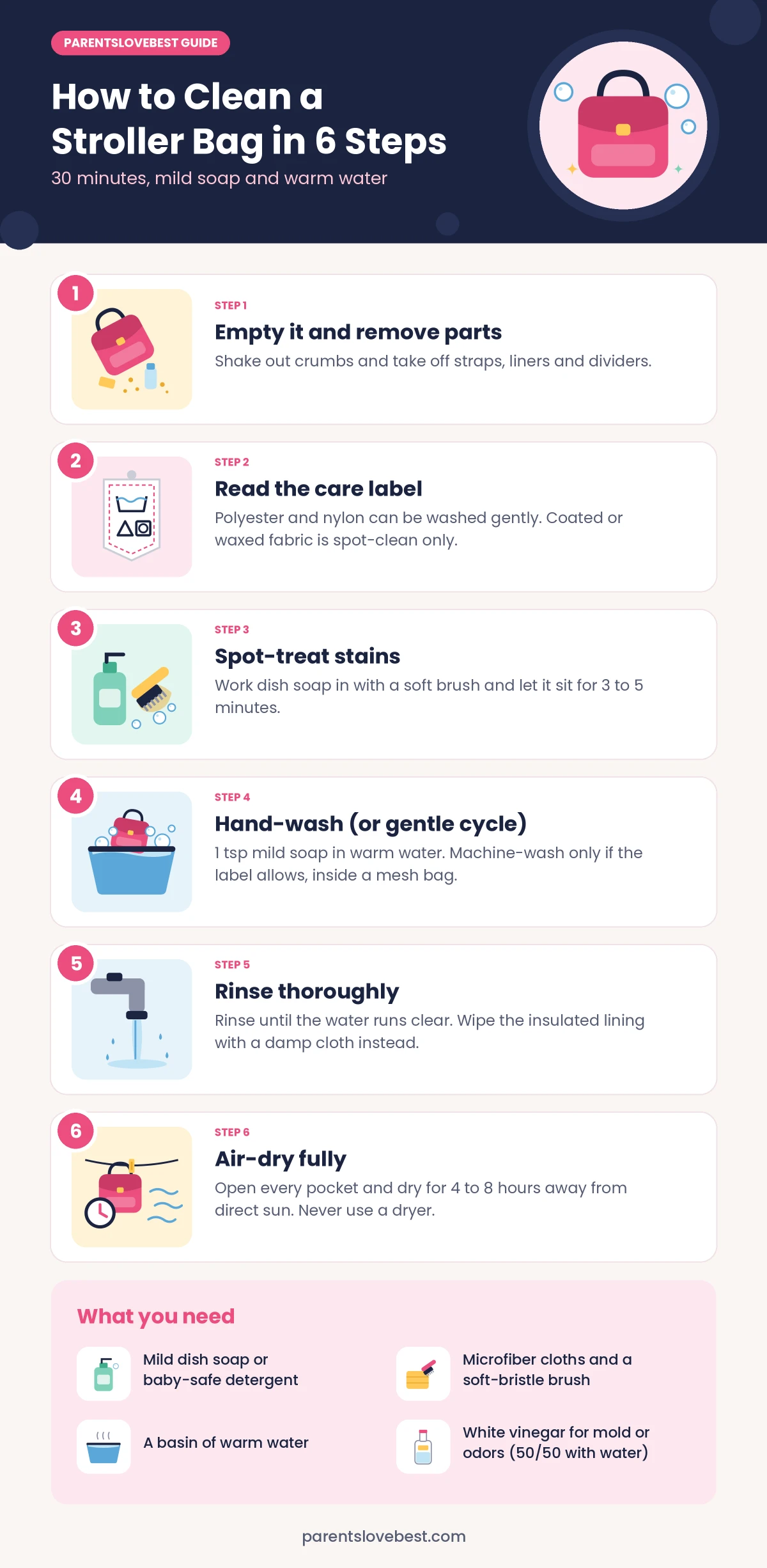
How to Clean a Stroller Bag: The 6 Steps at a Glance
Step 1: Empty the Bag and Remove Detachable Parts
Take everything out of the bag – including crumbs, wrappers, and anything stored in side pockets. Shake the bag upside down over a trash bin to dislodge loose debris.
Good to know
If the bag has detachable straps, insulated liners, or removable dividers, take those off now. Cleaning them separately gives you full access to every surface and prevents hardware from snagging fabric during washing.
Step 2: Check the Care Label and Identify the Fabric
The care label tells you whether the bag is machine-washable, hand-wash only, or spot-clean only. Most stroller bags use one of three materials:
| Fabric Type | Common Examples | Safe Cleaning Method |
|---|---|---|
| Polyester or nylon | Budget and mid-range bags | Hand-wash or gentle machine cycle |
| Canvas or cotton | Organic or lifestyle brands | Hand-wash, cold water only |
| Coated or waxed fabric | Waterproof bags | Spot-clean only – no soaking |
| Insulated lining | Thermal compartments | Wipe with damp cloth only |
Good to know
Skipping this step and machine-washing a spot-clean-only bag can permanently damage waterproof coatings.
Step 3: Spot-Treat Stains Before Full Washing
Apply a small amount of dish soap directly to any stained areas – food residue, formula, sunscreen, and grass are the most common culprits. Work the soap in with the soft-bristle brush using small circular strokes.
Good to know
Let it sit for 3 to 5 minutes. For dried-on stains, dampen the area first, let it soften for 2 minutes, then apply soap. Don't scrub hard on printed logos or stitched labels - that pulls thread and fades color.
Step 4: Hand-Wash or Machine-Wash the Bag
If hand-washing (recommended for most bags):
Fill a basin with warm water and add 1 teaspoon of mild dish soap
Submerge the bag and use a cloth or sponge to wipe down every surface - exterior, interior, all pockets, and under any flaps. Pay extra attention to seam lines where crumbs and bacteria collect.
If machine-washing
(only if the care label allows it):
Place the bag inside a mesh laundry bag to protect zippers and hardware. Select a gentle or delicate cycle with cold water. Do not use hot water - it sets stains and can shrink or warp the bag's structure.
For mold or persistent odors, add 1/4 cup of white vinegar to the wash water. White vinegar kills mold spores and neutralizes odors without leaving residue (Good Housekeeping, 2024).
Step 5: Rinse Thoroughly
Rinse the bag under cool running water until the water runs clear and no soap remains. Soap residue left in fabric attracts dirt faster and can irritate a baby’s skin if it contacts stored items.
Good to know
For the insulated lining, wipe it down with a damp cloth rather than rinsing under a tap - soaking the liner can break down the insulation layer.
Step 6: Air-Dry Completely Before Reassembling
Open all zippers and pockets fully. Lay the bag flat on a clean towel or hang it upside down on a drying rack so water drains out rather than pooling inside.
Dry the bag in a well-ventilated area away from direct sunlight
UV exposure bleaches fabric and degrades adhesives over time. Most bags dry fully in 4 to 8 hours at room temperature. Do not use a tumble dryer - heat warps plastic hardware, melts glue on insulated panels, and can shrink certain fabrics.
Once fully dry, reassemble any detachable parts and check that all zippers open and close without sticking.
How to Clean the Insulated Lining Specifically
The insulated compartment needs its own approach. Wipe it down with a cloth dampened in a 50/50 mix of water and white vinegar. This removes food odors and kills surface bacteria without soaking the insulation.
Good to know
Leave the compartment open and unzipped until it is bone dry before closing. Trapping moisture in an insulated liner leads to mold within 24 to 48 hours, especially in warm climates.
How Often to Clean a Stroller Bag
| Cleaning Type | Frequency |
|---|---|
| Wipe down interior after spills | Immediately after the spill |
| Spot-clean exterior | Weekly or as needed |
| Full wash | Once a month, or after illness exposure |
| Deep clean (vinegar treatment) | Every 3 months, or if mold or odor appears |
Good to know
Bags used for food storage or bottles need full washing more often than bags used primarily for non-food items.
Common Problems and How to Fix Them
| Problem | Likely Cause | Solution |
|---|---|---|
| Persistent musty smell after washing | Bag was stored damp or mold grew in liner | Soak in 50/50 water and white vinegar for 20 minutes, then re-rinse and dry fully |
| Zipper stiff or stuck after washing | Soap residue inside zipper teeth | Run a dry wax candle or lip balm along the teeth, then work the zipper back and forth |
| Fabric faded after washing | Hot water or direct sun drying | Wash in cold water and dry in shade going forward – fading cannot be reversed |
| Waterproof coating no longer repels water | Washing degraded the coating | Apply a fabric waterproofing spray (like Nikwax TX.Direct) after the bag is dry |
| White residue on fabric after drying | Hard water mineral deposits | Re-rinse with a small amount of white vinegar added to the rinse water |
Frequently Asked Questions About Cleaning a Stroller Bag
Can I put a stroller bag in the washing machine?
Some stroller bags are machine-washable, but many are not. Check the care label first. If it says machine-wash is safe, use a gentle cycle with cold water and place the bag in a mesh laundry bag to protect hardware. If the label says spot-clean or hand-wash only, do not put it in the machine.
How do I get mold out of a stroller bag?
Mix equal parts white vinegar and water, apply it to the moldy area with a cloth, and let it sit for 10 to 15 minutes. Scrub with a soft brush, rinse thoroughly, and air-dry completely. For mold inside an insulated liner, wipe with the vinegar solution, leave the compartment open, and dry it in a ventilated space for at least 8 hours.
What soap is safe to use on a stroller bag?
Use a mild, fragrance-free dish soap or baby-safe detergent. Avoid bleach, as it degrades fabric and plastics. Avoid enzyme-based cleaners on coated or waterproof fabrics, as they can break down protective coatings.
How do I get the sour milk or formula smell out of a stroller bag?
Wipe the interior with a 50/50 white vinegar and water solution, then rinse and air-dry fully. If the smell persists after drying, sprinkle baking soda inside the bag, leave it overnight, and shake it out the next day. Repeat the full hand-wash if needed.
How long does a stroller bag take to dry after washing?
Most stroller bags dry fully in 4 to 8 hours when laid flat or hung in a room with good airflow. Insulated bags take longer – up to 12 hours – because the liner holds moisture. Always confirm the bag is completely dry before closing pockets or putting items back inside.
Can I use disinfectant wipes on a stroller bag?
Yes, for the exterior and hard plastic parts. Avoid using disinfectant wipes on the interior fabric, especially areas that contact food or bottles – the alcohol and chemical residue can transfer to items stored inside. Use the vinegar solution for interior disinfecting instead.
Summary
- Empty the bag and remove detachable parts before cleaning anything.
- Check the care label to confirm whether the bag is machine-washable, hand-wash only, or spot-clean only.
- Spot-treat stains first, then hand-wash with mild dish soap and warm water (or machine-wash on a gentle cold cycle if the label allows it).
- Air-dry fully with all pockets open before reassembling – never use a dryer.