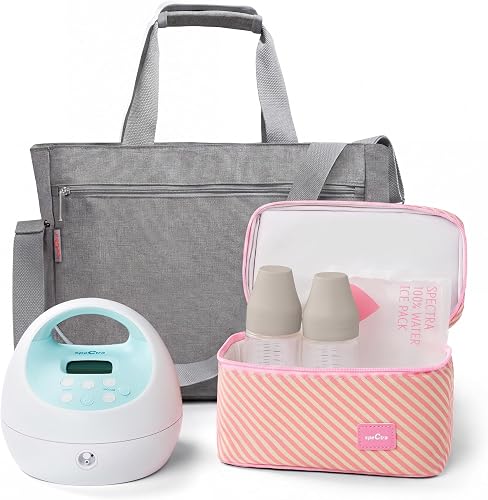
#1 · Best overall, exclusive pumping
Price
$169-$226
Type
Double electric
Max Suction
270 mmHg
Amazon Rating
4.6 (6.9K)

As an Amazon Associate, Parents Love Best earns from qualifying purchases. Learn more
The best breast pump depends on how often you pump. We compared 10 Amazon bestsellers across wearable, electric, manual and silicone styles.
The Spectra S1 Plus is a double electric breast pump with a closed system and a built-in rechargeable battery.
Prices below are Amazon snapshots from June-July 2026 tracking data (ASINSIGHT, 2026). Amazon prices change often, so check the current price before you buy.

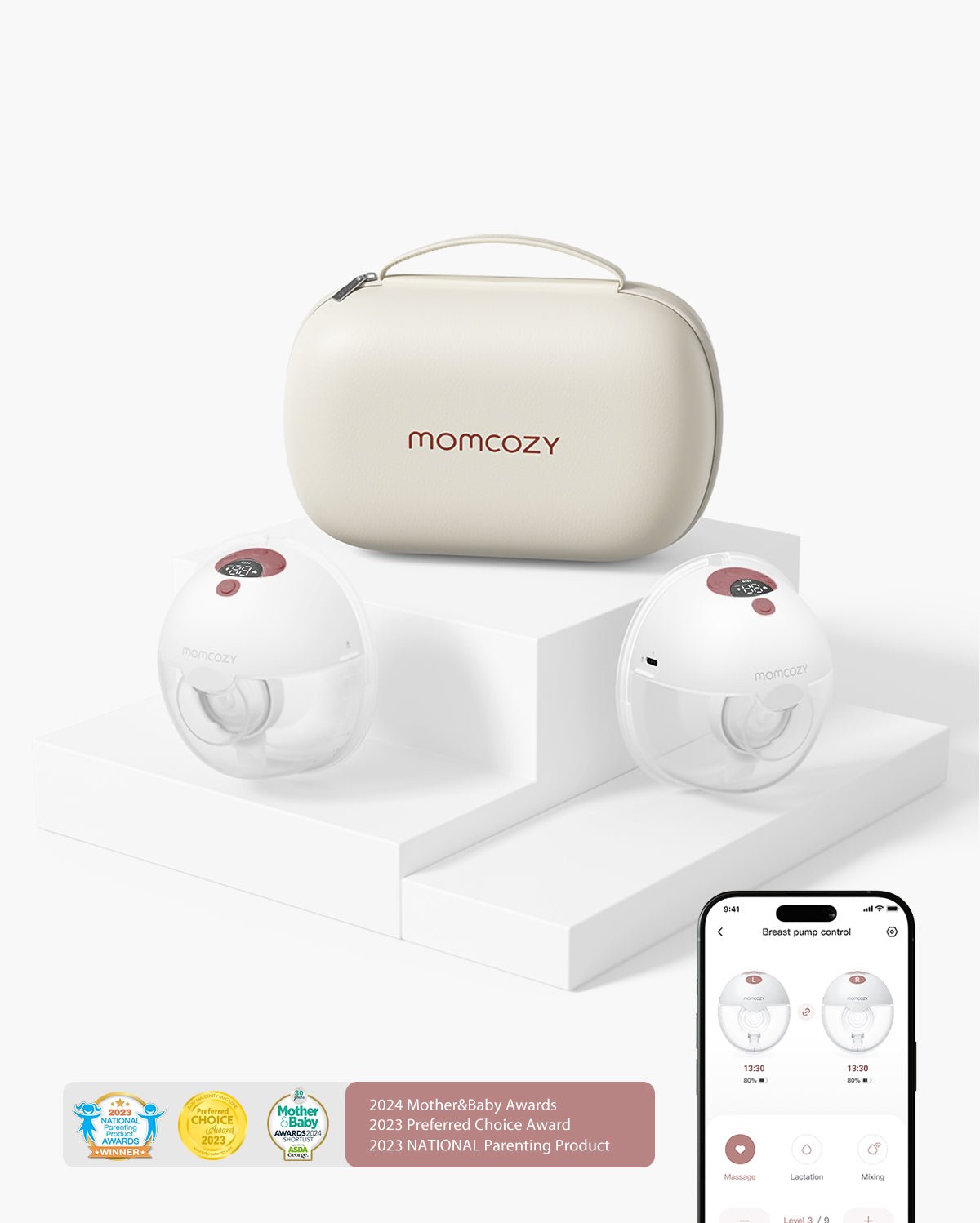


The best breast pump for you matches how often you pump. Exclusive pumpers need a double electric pump with adjustable suction. Parents who pump at work do well with a wearable. Occasional pumpers can rely on a manual or silicone pump. We judged all 10 pumps on the criteria below.
Manual, wearable, electric and silicone pumps suit very different pumping schedules.
Higher suction gives you more range, but comfort matters more than the top number.
More levels let you fine-tune strength, and separate letdown and expression modes copy how a baby feeds.
A closed system keeps milk out of the tubing and motor, which makes the pump cleaner to run.
A flange that fits your nipple is the single biggest factor in comfort and milk flow.
A longer runtime means fewer trips to a wall outlet during a workday.
Small cups force heavy producers to stop and empty mid-session.
Lighter wearable cups shift less inside a bra and keep their seal.
A quieter motor makes pumping easier on calls, at night and in shared spaces.
Fewer parts mean faster cleanup after every session.
Dishwasher-safe parts save time on the daily cleaning routine.
An app lets you change settings without reaching into your bra.
Warmth can make pumping more comfortable for parents with slow letdown.
Pumps run thousands of cycles, so motor coverage protects your purchase.
Many pumps can be bought through insurance or with pre-tax health dollars.
Valves, membranes and flanges wear out, so factor ongoing part costs into the total price.
A breast pump is a device that pulls milk from the breast using suction, either from a motor, your hand, or a squeezed silicone bulb. There are four main types, and the right one depends on how many sessions you need each day.
| Pump Type | How It Works | Best For |
|---|---|---|
| Double electric | A motor drives both flanges through tubing, with adjustable speed and suction. | Exclusive pumping, building supply, three or more sessions a day. |
| Wearable | A small motor sits on each cup inside your bra, with no tubing or cords. | Pumping at work, during a commute or while caring for other kids. |
| Manual | You squeeze a handle to create suction on one breast at a time. | Occasional pumping, travel and a backup when power is out. |
| Silicone (passive) | You squeeze a silicone bulb and its suction draws milk without further effort. | Catching letdown from one side while your baby nurses on the other. |
A closed system pump has a barrier, called a backflow protector, between the milk and the motor. It works like a one-way door: air passes through, milk stays on your side. An open system has no such barrier, so milk can reach the tubing.
"Hospital grade" is a marketing label, not a regulated standard The FDA does not set requirements a pump must meet to use that name, so each brand defines it differently (Poppylist, 2022). Compare suction numbers, modes and system type instead of relying on the label.
Each review covers what the pump does, who it suits, specs from manufacturer and retailer listings, and the trade-offs buyers report most often.
The Spectra S1 Plus is a double electric breast pump with a closed system and a built-in rechargeable battery. It earns the top spot because it pairs strong, adjustable suction with a 4.6-star rating from about 6,900 Amazon reviews (ASINSIGHT, 2026).
The S1 Plus is built for parents who pump several times a day. It pumps both breasts at once, so one session replaces two. You set cycle speed and suction separately, which lets you find a rhythm that triggers letdown without pinching or pain.
The closed system pays off over months of use. A backflow protector sits between each bottle and its tubing, so milk never reaches the motor. That keeps the tubing dry, reduces the risk of mold and means you only wash the parts that touch milk.
The battery is what separates the S1 Plus from its sibling, the Spectra S2 Plus, which must stay plugged in (Babylist, 2026). Three hours of runtime covers several sessions, so you can pump in the nursery, a parked car or an office without hunting for an outlet.
Massage mode runs fast, light cycles to start letdown. Expression mode then switches to slower, deeper pulls, the same two-step pattern a baby uses at the breast. The pump remembers your last settings, so a 3 a.m. session starts where you left off, with the soft night light instead of the overhead lamp.
The S1 Plus ships with 24mm and 28mm flanges (Wellbefore, 2026). Many parents measure smaller than 24mm, so budget for extra flanges or inserts if a lactation consultant sizes you down.
Exclusive pumpers and parents who pump three or more times a day.
Parents who need to pump while walking, driving or working hands-free.
The eufy S1 Pro is a wearable, in-bra breast pump with a heated silicone flange. It was the third best-selling breast pump on Amazon in July 2026, with an estimated 10,000 units sold that month (ASINSIGHT, 2026).
Warmth helps milk flow, which is why many parents hold a warm compress to the breast before pumping. The S1 Pro builds that step into the flange. A temperature sensor holds the silicone at your chosen setting, and the pump reaches 95°F (35°C) in about 30 seconds (Currys, 2026).
eufy claims heated pumping raises milk output by 30%, but that figure comes from feedback from just over 300 of its own users, not a clinical trial (eufy, 2026). Treat it as a brand claim. The comfort benefit is easier to judge: warm silicone feels closer to skin than cold plastic.
The charging case is the S1 Pro’s practical edge. You drop the pump cups into the case between sessions, much like wireless earbuds, and it keeps them charged for up to five days (eufy, 2026). That makes it a strong pick for work trips and long days away from an outlet.
Suction tops out at 300 mmHg. eufy notes that international standards cap breast pump suction at 40 kPa, which equals about 300 mmHg, to protect breast tissue (eufy, 2026). The S1 Pro sits at that ceiling, and the app lets you adjust rhythm and speed instead of pushing suction higher.
The motor runs at 46 dB (WorldWide Stereo, 2026), which is quiet enough for a video call with your microphone muted. The box includes 17mm, 19mm and 21mm sizing inserts (Currys, 2026), useful because many parents need a smaller fit than the default flange.
Working parents who pump away from home and want warmth to help a slow letdown.
Exclusive pumpers on a tight budget, or parents who prefer a pump with no app.
The Momcozy M5 is a lightweight wearable breast pump with buttons on the pump and optional app control. It sold an estimated 7,000 units on Amazon in July 2026 and holds a 4.3-star rating (ASINSIGHT, 2026).
At about 230 g per pump, the M5 is one of Momcozy’s lighter wearables (Mumsnet, 2026). A lighter cup shifts less inside a nursing bra, which helps the seal hold when you bend over a crib, lift a car seat or climb stairs.
Wearable pumps can slide inside a bra and lose suction. The DoubleFit flange is Momcozy’s fix: it angles the pump horizontally to follow the curve of the breast, which gives the cup a more stable seat while you move.
The app is optional. You can run the M5 from its digital display, or open the Momcozy app to adjust both cups together or each side separately (Wellbefore, 2026). Separate control helps if one breast produces more milk and needs a different setting.
Mixed mode alternates stimulation and expression on its own, so you do not need to switch by hand once letdown starts. Combined with 9 suction levels, the M5 gives you 27 setting combinations, enough range for sore early weeks and stronger sessions later on.
Battery life is the trade-off. Retailers list the standard M5 at up to 150 minutes per charge (Wellbefore, 2026), well short of the eufy S1 Pro with its case. Charge it over USB-C each night and it should cover a normal workday.
Parents who want a quiet, light wearable with app control for under $200.
Exclusive pumpers who plan to use a wearable as their only pump.
The eufy E20 brings eufy’s heated flange to a lower price, with 3 heat levels instead of 7. It sold an estimated 3,000 units on Amazon in June 2026 (ASINSIGHT, 2026).
The E20 is the cheapest way to try a heated pump. It costs about half the S1 Pro’s Amazon price and keeps the same 300 mmHg suction ceiling (ASINSIGHT, 2026). If you are unsure whether heat helps you, this is a lower-risk test.
Three fixed heat levels are simpler than seven. Most parents pick one setting and leave it, so fewer choices rarely matter in practice. The top level reaches 107°F (42°C), slightly warmer than the S1 Pro’s 105°F maximum (eufy, 2026).
Four rhythm presets in the eufy app give you a starting point if you do not know which settings to choose. You can also build a custom rhythm. On at least one regional eufy page, custom rhythms are tied to a free trial (eufy, 2026), so check the current app terms before you buy.
The E20 has no charging case. eufy rates it at 4-6 sessions per charge (eufy, 2026), which covers a workday for most part-time pumpers. Plan to plug it in every night.
The cup uses the same 105° flange curve as eufy’s pricier models (JB Hi-Fi, 2026). The reinforced lower half matters most when you lean forward, which is when wearable pumps are most likely to leak.
Part-time pumpers who want heat without paying $280.
Frequent travelers who cannot charge every night.
The Paruu P16 is a low-cost wearable pump with an LED display and a wide suction range. At about $54-$65 for a 2-pack, it costs roughly a third of the Momcozy M5 (ASINSIGHT, 2026).
The P16 is the cheapest way to go hands-free on this list. It sold an estimated 5,000 units on Amazon in July 2026 and holds a 4.4-star rating (ASINSIGHT, 2026). That is a solid record for a budget brand, and it makes the P16 a sensible backup pump.
The suction floor matters as much as the ceiling. The lowest setting is 49.5 mmHg (Paruu, 2026), which gives a gentle start during the sore first weeks. You can then step up through 12 levels as your nipples adjust.
Three flange inserts come in the box: 19mm, 21mm and 24mm (Paruu, 2026). Many budget wearables ship with only one size, so this saves you a separate order if the default flange is too big.
Cleanup is simple. The pump assembles from 5 parts, and only 4 touch milk and need washing (Paruu, 2026). The LED display shows battery level, session time, mode and suction level, and the pump shuts off after 30 minutes.
Watch the cup size. Paruu lists 150 ml as the maximum but 120 ml as the recommended fill (Paruu, 2026). If you often pump more than 4 oz per side, you will need to stop and empty mid-session.
First-time wearable buyers and parents who want a cheap backup pump.
Exclusive pumpers who need maximum output from every session.
The Medela Harmony is a single manual breast pump and the best-selling breast pump on Amazon. It sold an estimated 20,000 units in July 2026 and holds a 4.5-star rating from about 21,700 reviews (ASINSIGHT, 2026).
The Harmony copies a baby’s feeding pattern with its handle. Pump the short side at a fast pace to trigger letdown. Once milk flows, switch to the long side for slower, deeper strokes (John Lewis, 2026). Most manual pumps offer only one stroke length.
The PersonalFit Flex shield has a 105° opening angle and an oval shape. Medela says this design puts less pressure on the milk ducts than a traditional round shield (Kespro, 2026). In practice, a gentler shield means less soreness on days when you pump by hand.
The Harmony needs no batteries, cords or outlets. It fits in a diaper bag, works during a power cut and costs less than a single replacement part kit for some electric pumps. Many parents keep one as a backup next to their electric pump.
The handle swivels, so you can work it with one hand and hold your baby or phone with the other (Aeroflow, 2026). The included stand holds the bottle upright and helps prevent spills between sessions. For night feeds, a quiet bottle warmer warms stored milk evenly.
The limits are clear. It pumps one breast at a time, and your hand does all the work, so daily use can tire your wrist. Medela’s warranty on the Harmony is 90 days (Aeroflow, 2026).
Occasional pumpers, travel and a backup to an electric pump.
Exclusive pumpers or anyone pumping more than once or twice a day.
The Lansinoh Manual Breast Pump is a hand pump that includes two flange sizes and a bottle nipple, so the collection bottle doubles as a feeding bottle. It holds a 4.4-star rating from about 12,000 Amazon reviews (ASINSIGHT, 2026).
The Lansinoh covers sizes the Medela Harmony does not. Its two flanges measure 25mm and 30.5mm (Lansinoh, 2026). If a standard 24mm shield pinches or rubs, the Lansinoh is the more comfortable manual pick out of the box.
The bottle is the clever part. If you are building a feeding kit, see our guide to the best bottles for breastfed babies. Lansinoh’s wide-neck bottles fit across its pump range, so you can pump, store and feed from one container (Lansinoh, 2026). Fewer transfers mean less spilled milk and fewer bottles to wash. Not sure how many you need? Read how many baby bottles you need.
The easy-express handle is shaped to reduce hand fatigue. The Amazon listing also notes it works with a pumping bra, which frees one hand while you pump.
The pump has fewer parts than most manual models, and the parts are dishwasher safe (Lansinoh, 2026). That matters for a backup pump, which often gets used in a rush on busy days.
Choose between the two manual picks by flange size. The Harmony suits parents who need 24mm or smaller. The Lansinoh suits parents who need 25mm or larger.
Parents with larger nipples and those who want one bottle from pump to feeding.
Parents who measure under 24mm or who pump daily.
The Haakaa Gen 1 is a one-piece silicone pump that uses passive suction to collect milk. It is the most-reviewed pump on this list, with a 4.6-star rating from about 95,800 Amazon reviews and an estimated 10,000 units sold in July 2026 (ASINSIGHT, 2026).
The Haakaa works by suction alone. You fold back the flange, squeeze the base, press it over your nipple and release. The vacuum then draws milk out. Attach it to one breast while your baby nurses on the other, and it catches letdown that would otherwise soak a nursing pad.
There are no valves, membranes or tubes. Cleaning takes seconds: rinse, wash and air-dry the single piece. That makes it the easiest pump on this list to keep clean.
Parents also use the Haakaa for engorgement relief. It draws off enough milk to soften an overfull breast without the full stimulation of an electric pump, which helps at night or between feeds.
Buyers note that it works best during nursing, not as a stand-alone pump (Walmart, 2026). It also tips over easily, and a kicking baby can knock it loose. Haakaa’s Gen 2 version adds a suction base that sticks to a table for about $25 (Walmart, 2026).
The Haakaa is silent and needs no power. It fits in a diaper bag and works on a plane, in a car or anywhere you would rather not unpack an electric pump.
Nursing parents who leak on the opposite side during feeds.
Parents who need to empty the breast fully away from their baby.
The Boon Trove is a 2-pack of silicone milk collectors that sit inside your bra and use passive suction. It sold an estimated 9,000 units on Amazon in July 2026 and holds a 4.5-star rating from about 5,100 reviews (ASINSIGHT, 2026).
The Trove solves the Haakaa’s biggest problem. Instead of hanging from the breast, it sits flat inside your bra, so it stays put while you nurse, walk or hold your baby (Boon, 2026). You do not need to hold it or watch for spills.
The 2-pack means you can collect from both sides at once, or keep one clean while the other is in use. The included travel pouch keeps both cups together in a diaper bag.
When you take it off, the Trove stands on its own and pours from a spout into a bottle or bag. Pop in the plug and you can put it straight into the fridge (Boon, 2026). That cuts out one transfer, and every transfer is a chance to spill.
The silicone is top-rack dishwasher safe and can be sterilized in a microwave sterilizer or boiling water (Boon, 2026). With no small parts, it is nearly as quick to clean as the Haakaa.
The 3 oz limit and passive suction mean the Trove catches leaks rather than empties the breast. Pair it with a manual, wearable or electric pump if you need to build a freezer stash.
Parents with heavy letdown who want to save leaked milk during the day.
Parents who need to pump a full session away from their baby.
The Frida Mom 2-in-1 switches between a hand pump and a silicone suction cup by swapping the top piece. It sold an estimated 2,000 units on Amazon in June 2026 and holds a 4.2-star rating from about 562 reviews (ASINSIGHT, 2026).
The 2-in-1 replaces two products. Use the handle to pump actively when you are away from your baby. Swap in the silicone top and it becomes a passive collector, like a Haakaa, for catching letdown during feeds (Babylist, 2026).
A typical routine looks like this: nurse on one side with the silicone cup on the other, then switch to the handle and finish emptying. You get both tools in one bag for the price of a single manual pump.
Frida sells the SoftFeel flange in 21mm and 27mm as add-ons (Macrobaby, 2026). That makes the 2-in-1 easier to fit than pumps that ship with one size and no matching options.
The design has few crevices, which speeds up cleaning. All the parts that touch milk are made without BPA, BPS, PVC or phthalates (Babylist, 2026).
It is newer than the Medela and Lansinoh pumps and has far fewer reviews. Some buyers report that the twist-on bottle connection can loosen during use (The Wearify, 2026), so check the seal before each session.
Nursing parents who pump occasionally and also leak during feeds.
Parents who pump daily or need a double pump.
Most US parents can get a breast pump at no cost through health insurance. Health plans must cover the cost of a breast pump, either as a rental or a new pump you keep, and this applies to Marketplace plans and all other plans except grandfathered ones (HealthCare.gov, 2026).
Your plan may set rules on whether the covered pump is manual or electric, how long a rental lasts and whether you receive it before or after birth (HealthCare.gov, 2026). Some plans require pre-authorization from your doctor, so ask your provider early in pregnancy.
Plans must also cover breastfeeding support and counseling for the full time you breastfeed (HealthCare.gov, 2026). That includes help from a lactation consultant, who can measure your flange size before you choose a pump.
If your plan only covers a basic model, you can often pay the difference to upgrade. Several pumps on this list, including the Spectra S1 Plus, are also FSA and HSA eligible (Babylist, 2026).
Clean every breast pump part that touches milk after every use. The CDC recommends this because germs grow quickly in breast milk residue left on pump parts (CDC, 2017).
Follow these steps from the CDC’s breast pump cleaning guidance (CDC, 2017):
Wash your hands with soap and water before touching the pump or pumped milk.
Take the pump kit apart and rinse every part that touched the breast or milk under running water.
Wash the parts in a wash basin used only for infant feeding items, not directly in the kitchen sink, using a brush reserved for pump parts.
Rinse again, then air-dry the parts on a clean, unused towel. Do not wipe them with a dish towel, which can transfer germs.
Store the dry parts in a clean, protected area until the next session.
Sanitize the parts at least once a day, for example by boiling them for 5 minutes, if your baby is under 3 months old, was born premature or has a weakened immune system (CDC, 2017). If you see mold inside the tubing, throw the tubing away and replace it (CDC, 2017).
Silicone pumps such as the Haakaa and Boon Trove are the fastest to clean because they are one piece. Wearable pumps have more small parts, such as valves and diaphragms, that need careful scrubbing.
Most pumping problems come from fit and settings, not from the pump itself. Avoid these mistakes to get more milk with less discomfort.
A flange that is too big or too small causes pain and reduces milk flow, so have a lactation consultant measure you before you buy extra parts.
Higher suction does not mean more milk; set the pump at the strongest level that still feels comfortable, then step down if it hurts.
Silicone collectors such as the Haakaa and Boon Trove catch leaks but do not empty the breast the way an electric or manual pump does.
Milk can reach the tubing and motor of an open-system pump, so a used one may carry another person's residue.
Valves and membranes stretch with use, and worn parts lower suction even when the motor works fine.
The Spectra S1 Plus is the best breast pump for most parents who pump daily. It combines 270 mmHg suction, 12 suction levels, a closed system and a 3-hour rechargeable battery (Babylist, 2026). If you need to pump hands-free, the eufy S1 Pro is the best wearable option.
Wearable breast pumps are more convenient, but traditional double electric pumps are usually the better choice for exclusive pumping. Wearables have smaller cups, shorter battery life and can lose their seal when you move. Many parents use an electric pump at home and a wearable at work.
Most electric and wearable pumps on this list top out between 270 and 309 mmHg. eufy notes that international standards cap breast pump suction at 40 kPa, or about 300 mmHg (eufy, 2026). Use the strongest setting that feels comfortable, not the highest number on the dial.
Yes, in most cases. US health insurance plans, except grandfathered plans, must cover the cost of a breast pump, either as a rental or a new pump you keep (HealthCare.gov, 2026). Your plan decides which models qualify, so call your insurer before you buy.
Clean every part that touches milk after every use. The CDC also recommends sanitizing parts at least once a day if your baby is under 3 months old, premature or has a weakened immune system (CDC, 2017). Air-dry parts instead of wiping them with a dish towel.
A manual breast pump is enough if you pump once a day or less, for example for a date night or a short trip. The Medela Harmony and Lansinoh Manual both use two-phase pumping. If you pump several times a day, an electric or wearable pump will save time and hand strain.
A closed system breast pump has a backflow protector that stops milk from reaching the tubing and motor. An open system has no such barrier, so milk can travel into the tubing. Closed systems are easier to keep clean, and the Spectra S1 Plus is a closed-system pump.
The American Academy of Pediatrics recommends exclusive breastfeeding for about the first 6 months, then continued breastfeeding alongside solid foods for 2 years or beyond, as long as parent and child both want to (AAP, 2022). Pumping counts as breastfeeding for these goals when your baby drinks your expressed milk.
The Spectra S1 Plus is the best breast pump for most parents because it pairs 270 mmHg closed-system suction with a rechargeable battery and a 4.6-star rating from about 6,900 Amazon reviews. If you need to pump hands-free at work, the eufy S1 Pro is the strongest wearable pick, and the Paruu P16 covers the same need on a budget. For occasional pumping, the Medela Harmony remains the simplest and most popular choice at under $30.