
#1 · Best overall
Price
Layering
4x8x4
Weight Range
7-15 lbs
Cotton Type
Unbleached

As an Amazon Associate, Parents Love Best earns from qualifying purchases. Learn more
We compared 10 prefold diapers from OsoCozy, Humble Bebe, and Fasoar by layering, sizing, cotton type, and value to help you build a stash.
The OsoCozy Unbleached Infant 4x8x4 is a 12 x 16 inch, all-cotton prefold built for babies weighing 7-15 lbs.
This table lists the layering, weight range, cotton type, and best use for all 10 prefold diapers. Prices change often on Amazon, so use the links to check the current price.


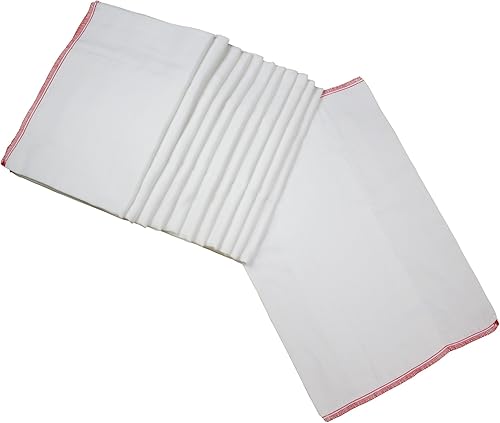


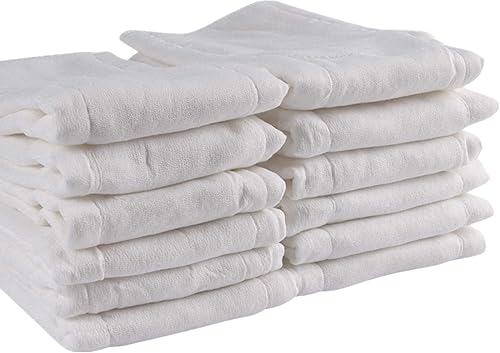

A prefold diaper is a rectangle of cotton sewn into three panels, with extra layers stitched into the center panel where babies wet the most. You either wrap it around your baby and secure it with a fastener, or fold it in thirds and lay it inside a waterproof diaper cover.
The three-part number on the label, such as 4x8x4, tells you the layer count in each panel. The two outer panels have 4 layers and the center panel has 8 (ClothDiaper.com, 2026). A higher center number means more absorbency and more drying time.
the thickest part sits where the weight lands. Most families washing at home prefer 4x8x4 prefolds, while diaper services often use 4x6x4 to save drying time and energy (ClothDiaper.com, 2026).
Every prefold on this list needs a separate Diaper cover (the waterproof outer shell). Prefolds absorb liquid, but they do not stop leaks on their own.
Unbleached prefolds keep cotton's natural beige color, while bleached prefolds are processed to a bright white. ClothDiaper.com reports its customers prefer unbleached prefolds 4 to 1, and the retailer describes them as softer and longer lasting than bleached versions.
The trade-off is prep time. Unbleached cotton contains natural oils that block absorbency until you wash the prefolds several times in hot water. OsoCozy tells buyers to wash its bleached prefolds once before first use (OsoCozy, 2026).
The right prefold diaper matches your baby’s weight, your laundry routine, and the diaper cover you plan to use. Use these 16 criteria to compare options before you buy.
More center layers hold more liquid, which means fewer leaks between changes.
A prefold sized for your baby's weight fits snugly and avoids bulk under clothing.
Sized prefolds fit better at each stage, while one-size prefolds cost less up front.
100% cotton resists odor buildup better than prefolds with a polyester inner fill, according to OsoCozy (OsoCozy, 2026).
Unbleached cotton is softer over time but needs more prep washes before first use.
Twill and gauze weaves are the traditional "diaper service quality" fabrics used by professional diaper services.
Cotton prefolds shrink about 5-10% after washing, so the post-wash size is the one that matters (OsoCozy, 2026).
Pre-washed prefolds need fewer prep cycles before they reach full absorbency.
A 12-pack is a common starting point, but most families need more than one pack.
Dividing the pack price by the count shows the real value between 10-pack and 12-pack listings.
The prefold should fold to fit inside the cover you already own without bunching at the legs.
Longer "traditional" prefolds wrap around a baby and work with pins or a Snappi-style fastener.
Thicker prefolds take longer to air-dry or tumble-dry, which matters if you wash every day.
Tight serging on the edges prevents fraying after hundreds of washes.
Colored edge stitching lets you sort sizes quickly when you fold laundry.
Prefolds double as burp cloths, changing pad liners, and cleaning rags once your baby outgrows them.
Below are detailed reviews of all 10 prefold diapers, ranked from our top overall pick to the best budget and trial options.
The OsoCozy Unbleached Infant 4x8x4 is a 12 x 16 inch, all-cotton prefold built for babies weighing 7-15 lbs. It earns the top spot because it covers the longest stretch of the newborn-to-infant stage with the thickest standard layering.
The 4x8x4 layering puts 8 layers of cotton in the center and 4 on each side. Jillian’s Drawers calls this the size parents buy most often for the newborn stage, noting it runs slightly big for the first 2-3 weeks and usually fits until 3-5 months or about 14 lbs (Jillian’s Drawers, 2019).
OsoCozy builds these prefolds from 100% unbleached Indian cotton in a twill weave, the same “diaper service quality” (DSQ) fabric that professional diaper services use. The brand states there is no polyester filler inside, which it says helps prevent the ammonia smell synthetics can trap (OsoCozy, 2026).
Plan for shrinkage. The unwashed prefold measures 12 x 16 inches and settles to about 11 x 13 inches after washing (Jillian’s Drawers, 2019). That post-wash size is what makes it fit a small baby well once it quilts up.
This size keeps working after your baby outgrows it as a wrapped diaper. Jillian’s Drawers notes the Infant size fits inside medium and large pocket diapers and one-size covers on their bigger settings, which makes it a long-term insert (Jillian’s Drawers, 2019).
Parents building a main newborn-to-infant stash who wash at home.
Parents who want a diaper that works straight out of the package with no prep.
The Humble Bebe 12 Pack is a set of pre-washed, unbleached 4x8x4 cotton prefolds rated for babies from 10-30 lbs. It is the easiest single purchase for parents who want one pack that covers several stages.
Humble Bebe arrives pre-washed, which cuts down the prep cycles that unbleached cotton normally needs. The brand says a mother developed the product after frustrating experiences cloth diapering her two sons (Humble Bebe, 2026).
The 4x8x4 layering matches OsoCozy’s thickest standard option. Humble Bebe states that when you fold the prefold in thirds and use it as an insert, the absorbent zone reaches 16 layers of cotton (Humble Bebe, 2026). That makes it a strong nighttime insert inside a cover.
Humble Bebe positions this prefold for two uses: wrapped traditionally with a fastener for newborns, or folded as a pad for bigger babies and toddlers. Humble Bebe says it fits nearly any cloth diaper cover on the market (Humble Bebe, 2026).
Long-term durability is where buyer reports stand out. One reviewer on Desertcart wrote in a 2022 update that the same set lasted through potty training past age 2 and was ready for a second baby (Desertcart review, 2022). Treat that as one user’s experience, not a lab result.
First-time cloth diaper parents who want one reliable pack to start.
Parents of preemies or babies under 10 lbs.
The OsoCozy Infant 4x8x4 dozen in bleached cotton is the white version of our top pick, sized for babies weighing 7-15 lbs. It suits parents who want bright white prefolds that are ready after a single wash.
OsoCozy says its bleached prefolds need only one wash before first use (OsoCozy, 2026). That is a real time saver compared with unbleached cotton, which needs multiple hot washes to strip natural oils.
The fabric is the same thick twill weave OsoCozy supplies to diaper services. The brand says the cotton starts soft and gets softer with repeated washing, and the prefolds contain no polyester interior fill (OsoCozy, 2026).
OsoCozy recommends just two sizes for most families: this Infant 4x8x4 for 7-15 lbs and the Premium 4x8x4 for 15-30 lbs (OsoCozy, 2026). Buying this dozen covers the first stage of that two-size plan.
Bleached prefolds show stains more clearly than beige ones. If that bothers you, sunning wet prefolds on a clothesline is a common, low-cost way to fade stains on white cotton.
Parents who want white prefolds with minimal prep before the baby arrives.
Parents who want to avoid bleached fabric against their baby's skin.
The OsoCozy Medium 4x6x4 is a dozen-count prefold for babies weighing 11-22 lbs. It is the best choice if you wash often and want prefolds that dry faster than 4x8x4 styles.
The 4x6x4 layering places 6 layers in the center instead of 8. ClothDiaper.com notes that diaper services choose 4x6x4 to reduce drying time and energy use (ClothDiaper.com, 2026). At home, that means quicker turnaround between laundry loads.
The 11-22 lb range fills the gap between newborn prefolds and larger toddler sizes. That overlap works well for babies who outgrow the Infant size early but are not ready for a big wraparound prefold.
The trade-off is lower absorbency per diaper. For daytime use with frequent changes, 4x6x4 is usually enough. For naps or nights, pair it with an extra insert or a smaller prefold laid in the center.
OsoCozy also points to the 4x6x4 layering as a good burp cloth size (OsoCozy, 2026). Once your baby moves on, these become everyday rags.
Parents who wash every day or two and want quick-drying prefolds.
Heavy wetters who need maximum overnight absorbency.
The OsoCozy Newborn 4x6x4 is a dozen-count prefold for babies weighing 6-10 lbs. It gives newborns a trimmer fit than the Infant size during the first weeks of life.
Most full-term newborns land inside the 6-10 lb range at birth. A smaller prefold wraps without excess fabric bunching between the legs, which helps covers seal and reduces leaks.
OsoCozy warns against relying on one-size prefolds early on, since they tend to be bulky on newborns (OsoCozy, 2026). This size is the brand’s answer to that problem for babies too small for the Infant 4x8x4.
The 4x6x4 layering keeps the diaper thin enough for newborn clothing. Newborns also get changed often, so the lower absorbency compared with 4x8x4 rarely becomes an issue during the day.
Expect a short window of use as a main diaper. Once your baby grows, these prefolds work as doublers laid inside a larger prefold for extra overnight absorbency.
Parents who want a snug fit from day one with an average-size newborn.
Parents who want one size to last several months.
The OsoCozy Unbleached Preemie 2x6x2 is the smallest prefold on this list, sized for babies weighing 4-10 lbs. It is the right pick for premature or low birth weight babies.
The 2x6x2 layering keeps the side panels thin at 2 layers each, so the diaper wraps a tiny baby without adding bulk. Jillian’s Drawers lists the unwashed size at 9.5 x 13 inches, shrinking to about 9 x 11 inches after washing (Jillian’s Drawers, 2019).
Jillian’s Drawers calls this the ideal size for most small newborns but adds that it runs too small for 9-10 lb babies. The retailer notes many parents skip it because it fits for only 2-6 weeks (Jillian’s Drawers, 2019).
That short window does not make it a wasted purchase. These small prefolds are a popular doubler, laid inside a larger prefold or pocket diaper to add absorbency for naps and nights as your baby grows.
The unbleached Indian cotton matches the fabric in OsoCozy’s larger sizes, so it softens with washing. Plan for several prep washes before first use.
Parents expecting a premature or low birth weight baby.
Parents expecting a larger newborn near 9-10 lbs.
The Fasoar 6-Ply 10 Pack is a 20 x 14 inch cotton prefold rated for babies and toddlers from 10-35 lbs. It is the best budget pick if you want one size to cover most of the diapering years.
Fasoar describes the fabric as 100% cotton in a lint-free, tightly woven gauze, and lists the product as unbleached birdseye cotton (Fasoar, 2026). “6-Ply” refers to the center panel. Fasoar describes the layering of its 6-ply line as 2x6x2 (Fasoar, 2026).
The one-size design works two ways. Fasoar says you can wrap it with fasteners on newborns or fold it as an insert for bigger babies and toddlers, and that it fits nearly any cover (Fasoar, 2026).
The 10-35 lb range is wider than any OsoCozy size. The catch is fit: at 20 inches long, the prefold will be bulky on a 10 lb baby, and the thin 2-layer sides add less absorbency than a 4x8x4.
Fasoar claims the prefolds never pill or shrink. All cotton shrinks to some degree, so buy with the expectation of some size change after washing. The product first became available on Amazon in November 2018 (Amazon, 2026).
Budget-focused parents who want one prefold size for the long haul.
Parents of newborns under 10 lbs who want a trim fit.
The Fasoar 6-Ply Cloth Diapers and Burp Cloths is a 19.5 x 14 inch cotton prefold marketed for both diapering and feeding cleanup. It is the best pick for parents who want one stack of cloths for two jobs.
Fasoar lists this prefold as 2x6x2 layers, with extra layers in the center for absorbency and fewer layers on the sides for comfort (Fasoar, 2026). The 10-35 lb weight range matches Fasoar’s other 6-ply prefold.
Fasoar says the fabric is free of polyester, dyes, and several chemicals including chloroform and lead (Fasoar, 2026). For a cloth that touches your baby’s face during burping, that is reassuring to see stated.
The dual-use angle is practical. A prefold’s thick center panel catches spit-up well, and its rectangular shape drapes over a shoulder. You can buy one stack and move cloths between the changing table and the nursing chair.
The main compromise is that a cloth sized for burping is also sized as a one-size diaper. Like other one-size prefolds, it will feel large on a small newborn.
Parents who want one set of cloths for diapering and feeding.
Parents who want a dedicated, sized diaper for each stage.
The Fasoar 3-Ply 12 Pack is a thinner, 20-inch-long cotton prefold rated for 10-35 lbs. It is best used as a backup diaper, a doubler, or a set of burp cloths rather than your main stash.
Fasoar describes these as 100% cotton in a lint-free, tightly woven gauze (Fasoar, 2026). Fasoar does not break down the exact panel layering, so treat “3-ply” as a signal that these are thinner than the brand’s 6-ply line.
Thin prefolds have real uses. They dry quickly, fold compactly into a diaper bag, and add a light boost of absorbency when laid inside a thicker prefold. They also make soft, absorbent changing pad liners.
As a primary diaper, 3-ply prefolds fall short for most babies. A customer review quoted by Humble Bebe described 4x8x4 prefolds as noticeably thicker and more absorbent than the 3-ply ones received as a baby shower gift (Humble Bebe, 2026).
The 12-count pack keeps the price per cloth low. That makes it a sensible buy for a diaper bag kit or a stack of spare cloths around the house.
Parents who want spare cloths for the diaper bag, burping, and doubling.
Parents building their main daytime or overnight diaper stash.
The Fasoar 3-Ply 10 Pack is the same thin, one-size cotton prefold style as the 12 Pack, sold in a smaller count. It is the cheapest way to test whether prefolds suit your routine before you buy a full stash.
Fasoar describes these prefolds as unbleached, multi-use cotton for babies and toddlers from 10-35 lbs (Fasoar, 2026). Like the 12 Pack, it does not break down the panel layering.
A trial pack answers practical questions fast. You learn whether you prefer wrapping with a fastener or folding into a cover, and how long cotton takes to dry in your home, before spending more.
For ongoing use, these cloths fill the same roles as the 12 Pack: doublers, burp cloths, and diaper bag spares. Once you settle on a system, move up to a 4x8x4 prefold for daily diapering.
Check the product photos and title carefully when ordering. Fasoar sells several near-identical listings with different ply counts and pack sizes, so it is easy to add the wrong one to your cart.
Parents who want to try prefolds before committing to a full stash.
Parents who already know they want a complete prefold system.
New prefold diapers need prep washing before they absorb well, and the number of washes depends on whether the cotton is bleached or unbleached. Bleached OsoCozy prefolds need one wash before use (OsoCozy, 2026). Unbleached cotton needs several hot washes to remove natural oils.
Follow these steps for unbleached prefolds:
Wash new prefolds in hot water with a small amount of detergent, and keep them apart from synthetic fabrics so the cotton oils do not transfer.
Dry the prefolds on a hot setting between washes, because the wash-and-dry cycle is what makes the cotton fibers fluff up and quilt.
Repeat the cycle several times until a few drops of water soak in immediately instead of beading on the surface.
Measure a prefold after prep, since cotton prefolds shrink roughly 5-10% (OsoCozy, 2026).
For daily laundry, rinse or pre-wash soiled diapers, then run a full hot wash. Store dirty diapers in a dry pail or wet bag and wash every two to three days to limit odor.
The number of prefold diapers you need equals your baby’s daily changes multiplied by the days between washes, plus a spare margin. Newborns change more often than older babies, so newborn stashes are larger.
Use this simple formula:
Count how many diaper changes your baby needs in one day.
Multiply that number by how many days you plan to go between washes.
Add about 25% extra so you still have clean diapers while a load dries.
You also need diaper covers. Because a cover can be reused through several changes unless it gets soiled, most families buy far fewer covers than prefolds.
Prefold diapers usually cost less over time than disposables because you buy them once and reuse them for months or years. Earth911 estimates a typical American family spends between $840 and $1,200 a year on disposable diapers, depending on brand (Earth911, 2026).
Your savings depend on your water, energy, and detergent costs. Buying used covers or passing prefolds to a second child increases the savings further.
Prefold diapers keep diaper waste out of landfills because you wash and reuse them. The U.S. Environmental Protection Agency (EPA) estimated disposable diaper generation at 4.1 million tons in 2018, about 1.4% of all municipal solid waste that year (EPA, 2018 data).
Cloth diapers do use water and energy for washing. Line-drying and washing full loads reduce that footprint.
Prefold diapers are safe when you change them often, secure them properly, and keep fasteners away from your baby’s skin. Wet cotton sits against the skin, so frequent changes help prevent diaper rash.
Follow these safety practices:
Change a wet prefold promptly, because cotton does not have the stay-dry layer found in disposable diapers.
Use a stretchy three-prong fastener or diaper pins with locking safety heads, and slide your fingers between the pin and your baby's skin while fastening.
Keep pins and fasteners out of your baby's reach during changes, since small parts are a choking hazard.
Call your pediatrician if a rash lasts more than a few days or shows blisters or open sores.
The best prefold diaper for most full-term newborns is the OsoCozy Newborn 4x6x4 for babies 6-10 lbs, or the OsoCozy Infant 4x8x4 if you want a size that lasts longer. For preemies or babies under 6 lbs, choose the OsoCozy Preemie 2x6x2, which fits 4-10 lbs.
4x8x4 means the prefold has 4 layers of fabric in each outer panel and 8 layers in the center panel. The center panel is thickest because that is where babies wet the most. A 4x8x4 prefold absorbs more than a 4x6x4 but takes longer to dry.
Yes, you need a waterproof diaper cover with every prefold diaper. Prefolds absorb liquid, but cotton alone does not stop leaks onto clothing or bedding. Most prefolds fit standard wrap-style and one-size covers when folded correctly.
One-size prefold diapers are worth buying if budget matters more than fit. They cost less up front because one size covers a wide weight range, such as 10-35 lbs. OsoCozy notes that one-size prefolds are bulky on newborns and less absorbent for bigger babies (OsoCozy, 2026).
The simplest method is the trifold: fold the prefold in thirds lengthwise and lay it inside a diaper cover. Fasoar recommends a wraparound method: fold in thirds, fold up the front end to fit your baby, spread out the back, then wrap the wings around and fasten (Fasoar, 2026).
New prefold diapers leak most often because they have not been prepped enough. Unbleached cotton contains natural oils that repel water until the prefolds are washed and dried several times. Poor cover fit and a prefold that is too small for your baby’s weight are the other common causes.
Buy unbleached prefold diapers if you want softer, longer-lasting cotton and do not mind extra prep washes. Buy bleached prefolds if you want white cotton that is ready after one wash. ClothDiaper.com reports customers choose unbleached 4 to 1 (ClothDiaper.com, 2026).
The OsoCozy Unbleached Infant 4x8x4 is the best prefold diaper for most families, because its 8-layer center and 7-15 lb sizing cover the busiest diapering months and it later works as a pocket diaper insert. Pair it with a larger 4x8x4 prefold once your baby passes 15 lbs.
If you want one pack that stretches from 10-30 lbs, the pre-washed Humble Bebe 12 Pack is the runner-up. On a tight budget, the Fasoar 6-Ply 10 Pack covers 10-35 lbs for a low upfront cost.