
#1 · Active rash, newborns
Approx. Price per Wipe
~$0.06
NEA Seal
Yes
Standout Detail
2 listed ingredients

As an Amazon Associate, Parents Love Best earns from qualifying purchases. Learn more
The best baby wipes for diaper rash are fragrance free, alcohol free and made with 99% water or more. Here are 10 picks, compared ingredient by ingredient.
WaterWipes Original is the best baby wipe for diaper rash because its label lists only two ingredients: 99.9% purified water and grapefruit seed extract.
The table below compares all 10 wipes on price, certification, and their most useful feature. Prices are approximate per-wipe costs from US retailers in 2026 and change often, so check the current listing before buying.




The best baby wipes for diaper rash clean the skin with the fewest possible ingredients and the least rubbing. Fragrance, drying alcohol, and certain preservatives can irritate skin that is already red, so the ingredient list matters more than the brand name. These 16 criteria were used to rank every wipe in this guide.
Fragrance is a common trigger of contact irritation, and "unscented" products can still contain masking agents.
Ethanol and isopropyl alcohol sting and dry inflamed skin. Fatty alcohols such as cetyl alcohol behave differently.
MIT is a preservative linked to allergic contact dermatitis from wet wipes in children (Chang and Nakrani, 2014).
Several brands remove this preservative from sensitive-skin wipes because it can irritate compromised skin.
Every wipe on this list is paraben-free, so it is a minimum standard, not a bonus.
Wipes with 99% water or more leave less residue on irritated skin.
Fewer ingredients mean fewer possible triggers if your baby reacts.
The NEA reviews ingredient, safety, and toxicity data before awarding the seal for sensitive skin.
The Environmental Working Group (EWG) checks ingredients against its own list of chemicals of concern.
Healthy skin has a slightly acidic surface layer, called the acid mantle, that helps block irritants.
Thick wipes clean with fewer passes, and fewer passes mean less friction on a rash.
Larger sheets cover more skin, so you use fewer wipes per change.
Smooth sheets glide over sore skin, while quilted or textured sheets grab stool faster.
A wipe that is too dry drags across skin, and one that is too wet leaves the area damp under the diaper.
Newborns need 8 to 12 changes a day, so a one-cent difference adds up over a year.
A wipe you can buy at any grocery store is easier to stick with than one sold only online.
Each review below covers ingredients, certifications, real cost, and who should skip the wipe. The list runs from simplest formula to best value.
WaterWipes Original is the best baby wipe for diaper rash because its label lists only two ingredients: 99.9% purified water and grapefruit seed extract. When a rash is flaring, a shorter ingredient list means fewer things that can sting or trigger a reaction.
The formula is as close to plain water as a packaged wipe gets. Cleveland Clinic pediatric guidance points to 99% water wipes as a gentler swap when standard wipes seem to make a rash worse (Cleveland Clinic, 2023).
WaterWipes is transparent about the one trace preservative. The label notes benzalkonium chloride in the grapefruit seed extract, which keeps the water from growing bacteria. Parents with a baby who reacts to that specific compound now have the information to make a choice.
The wipes are thin and smooth, which suits a sore bottom. Smooth sheets slide instead of drag, so you can dab and lift on red skin without scrubbing.
WaterWipes also works for faces, hands, and eyes, so one pack covers the whole baby. That cuts the number of products touching your baby’s skin, which helps when you are trying to find what caused a reaction.
Babies with an active rash, newborns, and babies with eczema or a history of reactions to wipes.
Toddlers with heavy, solid-food stools, where a thicker textured wipe cleans in fewer passes.
Huggies Natural Care Sensitive is the best budget wipe for diaper rash because it carries the NEA Seal at roughly $0.04 per wipe. It is 99% purified water with aloe and vitamin E, and it leaves out the two preservatives most often flagged for irritation.
Huggies Natural Care is the wipe to buy if you want certified-gentle ingredients without paying premium prices. Bulk refill boxes bring the cost down further, which matters when you go through 60 or more wipes a week.
The formula leaves out MIT, the preservative behind a 2014 Pediatrics case series in which six children developed allergic rashes from wet wipes (Chang and Nakrani, 2014). Huggies now lists “does not contain MIT” on the package, so parents can confirm it at the store.
The sheet is pH-balanced and slightly thicker than WaterWipes. It handles a standard newborn change in one or two wipes, which keeps friction low on a red bottom.
Aloe and vitamin E add a light, soft feel without a lotion residue. The wipes are also hypoallergenic and dermatologist-tested, so they are a safe everyday choice once a rash has cleared.
Parents who want an NEA-approved wipe for daily use at a drugstore price.
Babies who react to aloe, or parents who want the absolute shortest ingredient list.
Coterie The Wipe is the best large-format wipe for diaper rash because each sheet measures 8 x 7.5 inches, up to 30% larger than other brands (Coterie, 2026). A bigger, thicker sheet means fewer passes over sore skin.
Coterie’s main advantage on a rash is size. One large sheet can clean a full diaper change, so you wipe the skin once or twice instead of four or five times. Less rubbing is one of the simplest ways to keep a rash from getting worse.
The formula holds two independent safety marks. It is EWG Verified, and it carries the NEA Seal, which puts it among the few wipes on this list with both.
In 2024 Coterie removed two ingredients that critics had flagged, silicone quaternium-17 and laureth-9, from its formula (My Chemical Free House, 2025). The current version lists water plus five ingredients.
The fibers are fully plant-based and plastic-free. Parent reviews on Babylist (2026) often mention needing only one or two wipes per change, which helps offset the higher per-wipe price.
Parents who want to wipe less often per change and are willing to pay more for a large, certified sheet.
Families on a tight budget, or anyone who needs to grab wipes at a local store.
The Honest Company Clean Conscious Wipes are the best pick for parents who want to read and understand every ingredient. They contain over 99% water and seven toxicologist-audited ingredients, all listed publicly (The Honest Company, 2026).
Honest publishes what each ingredient does, from the plant-derived cleanser to the citric acid that adjusts pH. If your baby reacts, you can look up every component instead of guessing.
The brand avoids phenoxyethanol on purpose. Honest states it leaves this preservative out because it can irritate compromised skin, such as a baby’s skin during diaper rash (The Honest Company, 2026).
The sheet is extra thick and quilted, at 7.1 x 8 inches. The texture grabs stool faster than a smooth wipe, which shortens the change and reduces how long you are touching sore skin.
The cloth is plant-based and plastic-free. Honest says it suits home or municipal composting when the wipe has not touched human waste, so it works for hands, faces, and spills.
Parents who read labels closely and want an EWG Verified wipe with a large sheet.
Babies with open or very raw skin, where a smooth, minimal-ingredient wipe or plain water is gentler.
Pampers Aqua Pure is the best water-based wipe from a major diaper brand. It is 99% purified water and 1% cleansing and pH-balancing ingredients, with no fragrance, ethanol, parabens, dyes, sulfates, or phthalates (Pampers, 2026).
Aqua Pure is a good choice if you already use Pampers diapers and want a simpler wipe without switching brands. The formula is noticeably shorter than standard Pampers wipes.
Pampers adds pH-balancing ingredients to the 1% that is not water. The brand says this helps restore skin’s natural pH after a diaper change, which matters because urine and stool push skin pH higher.
The single-wipe pop-top keeps the pack from drying out and stops three wipes from coming out at once. That is useful at 3 a.m. when you have one hand on the baby.
The cloth includes a cotton blend for softness. Pampers says these wipes are safe for newborn bottoms, hands, and faces.
Pampers families who want a near-water wipe without switching brands.
Parents who specifically want an NEA- or EWG-certified wipe.
Huggies Skin Essentials is the best wipe for big messes on rash-prone skin because it is the thickest wipe Huggies makes. It is 99% water with only seven ingredients and holds the NEA Seal of Acceptance (Huggies, 2026).
Thickness matters most during solid-food blowouts. A thin wipe smears stool around, so you end up wiping the same red patch several times. A thick, washcloth-like sheet lifts more in each pass.
Huggies publishes a specific pH range for this wipe, 4.5 to 6 (Huggies, 2026). That is a useful detail, because most brands only say “pH-balanced” without giving a number.
The seven-ingredient formula is shorter than Huggies Natural Care. It keeps the NEA Seal and leaves out the same irritants, so you get the gentleness of the budget line with a heavier sheet.
Parent reviews on the Huggies site often describe the wipe as soft and hard to tear. That durability means fewer torn wipes and less contact with dirty skin.
Older babies and toddlers on solid food who need a thick wipe that still meets sensitive-skin standards.
Newborns with small, liquid stools, where a thinner and cheaper wipe does the job.
Pampers Sensitive is the best wipe if you need something gentle that every store carries. It is fragrance-free, hypoallergenic, and made without rubbing alcohol, parabens, phenoxyethanol, or dyes (Pampers, 2026).
Pampers Sensitive is the wipe you can find at a gas station, pharmacy, or grocery store at 10 p.m. That matters during a rash, because switching to a scented wipe from a corner store can undo days of healing.
Pampers says the wipe is milder than a washcloth and water and helps maintain the skin’s natural pH (Pampers, 2026). It is also sold widely to US hospitals.
The sheet is 20% thicker than the brand’s basic wipe. It handles most changes without tearing, and the textured grip helps remove stool with less pressure.
Ingredient lists differ between countries. Check the label on your pack, since some older or non-US versions listed phenoxyethanol while the current US version is labeled phenoxyethanol-free.
Families who need a dependable fragrance-free wipe they can restock anywhere.
Babies with a persistent rash who need the shortest possible ingredient list.
Seventh Generation Free & Clear wipes are the best plant-derived option you can buy at a regular drugstore. They contain 0% fragrance, alcohol, parabens, or phenoxyethanol and use aloe vera as a skin conditioner (Instacart listing, 2026).
Seventh Generation uses a plant-based cleanser, quillaja bark extract, instead of synthetic surfactants. It is a good fit for parents who prefer plant-derived formulas but still want a wipe that is easy to find.
The wipes are thick enough to handle large messes without tearing. Walmart reviews (2026) often mention their softness and strength for babies with sensitive skin.
Seventh Generation is a Certified B Corporation, which means it meets third-party standards for social and environmental practices. That certification covers the company, not the wipe’s skin safety.
The sheet is a blend of wood fiber, polypropylene, and polyethylene, according to the brand’s FAQ (Carewell, 2026). That means it is not plastic-free or compostable, unlike Coterie, Honest, or WaterWipes.
Parents who prefer plant-derived formulas and need a wipe sold in regular stores.
Families who want a plastic-free or compostable wipe.
Mama Bear 99% Water Baby Wipes are the best value pick for parents who buy diaper supplies on Amazon. They are Amazon’s own brand, made with 99% purified water and free of alcohol, parabens, phthalates, and fragrance.
Mama Bear is the cheapest way to get a 99% water wipe on this list. If your baby does well on WaterWipes but your budget does not, this is the closest low-cost alternative.
The bulk packs are designed for Subscribe & Save. You set the delivery schedule once, and wipes arrive before you run out, which helps avoid emergency store runs for scented wipes.
The water content keeps residue low, which suits babies who react to lotion-heavy wipes. A few parent reviews note the wipes feel very wet, so pat the skin dry before putting on a fresh diaper.
Amazon also sells a separate Mama Bear “Gentle” line with chamomile, aloe, and vitamin E. Make sure you order the “99% Water” version if you want the simpler formula.
Budget-conscious parents who shop on Amazon and want a near-water wipe.
Parents who want a third-party certification on the package.
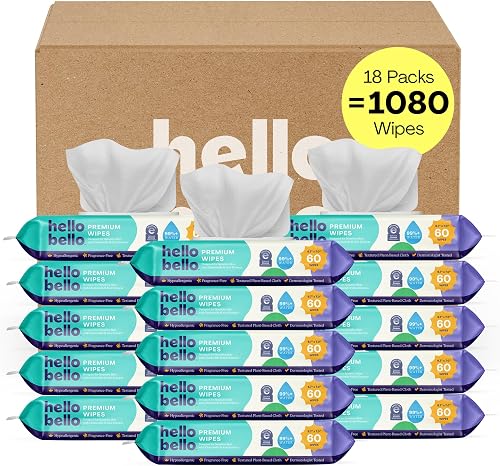
Hello Bello Fragrance-Free Baby Wipes are the best pick for diaper bags and travel because they come in flip-top pouches at a low price. They are 99% water, USDA Biobased 100%, and made with a plant-based cloth (Walmart, 2026).
Hello Bello wipes come in 60-count flip-top pouches that slip into any diaper bag. Having a gentle wipe with you means you never have to borrow a scented one on a bad rash day.
The brand lists formaldehyde donors among the ingredients it leaves out. These are preservatives that release small amounts of formaldehyde, a known skin sensitizer, and many conventional wipes still use them.
The cloth is plant-based and certified USDA Biobased 100%. The ribbed texture grips messes, which reviewers on ShopSavvy (2026) say helps avoid smearing.
Hello Bello includes chamomile extract. Most babies tolerate it well, but chamomile is a plant extract, so stop using these wipes if your baby has known plant allergies or the rash worsens.
Parents who want a gentle, low-cost wipe for the diaper bag and car.
Babies with plant or botanical allergies.
Fragrance, drying alcohol, and certain preservatives are the wipe ingredients most likely to make diaper rash worse. Check the label for these five before you buy any baby wipe for rash-prone skin.
Fragrance or parfum. A single “fragrance” entry can stand for many undisclosed chemicals. Nationwide Children’s Hospital advises avoiding wipes with fragrance during diaper rash (Nationwide Children’s Hospital, 2022).
Drying alcohol (ethanol or isopropyl alcohol). These sting and dry broken skin. Fatty alcohols such as cetearyl alcohol are emollients and are not the same thing.
Methylisothiazolinone (MIT or MI). The American Contact Dermatitis Society named MI its Contact Allergen of the Year in 2013, and a 2014 Pediatrics report linked it to rashes from wet wipes (Chang and Nakrani, 2014).
Phenoxyethanol. This common preservative is generally considered safe, but brands such as Honest and Huggies leave it out of sensitive-skin wipes because it can irritate compromised skin.
Essential oils and heavy botanicals. “Natural” scents from essential oils can still cause allergic reactions, so a rash-prone baby does best with fragrance-free wipes that skip them.
Stop using baby wipes when the rash is severe, blistered, bleeding, or has open sores. At that point, any wipe adds friction, so rinse the area with a squirt bottle of warm water and pat it dry instead (Cleveland Clinic, 2023).
Our step-by-step guide on how to get rid of baby diaper rash covers the full home routine. In short:
Change the diaper as soon as it is wet or soiled, including once overnight.
Rinse with warm water from a squirt bottle, or dab with a soft washcloth.
Pat dry and let the skin air-dry for a few minutes.
Apply a thick layer of zinc oxide or petroleum jelly barrier cream.
Return to a gentle, fragrance-free wipe once the skin is no longer broken.
Call your pediatrician if the rash does not improve after 2 to 3 days of home care, spreads beyond the diaper area, or comes with a fever over 100.4°F (38°C) (Nationwide Children's Hospital, 2022). Bright red patches with small red dots around the edges can point to a yeast infection, which needs a different treatment.
Diaper rash is the most common skin condition in young infants (Cleveland Clinic, 2023). In a study of 1,004 infants at a pediatric hospital in Cameroon, 18.4% had diaper dermatitis at the time of the visit, and wipes were the most-used cleaning method, at 75.7% (Chiabi et al., 2018).
Most diaper rash comes from moisture, friction, and contact with urine and stool, not from wipes. Wipes become a factor when they contain an irritant your baby reacts to, or when you rub too hard during a change.
Another 2014 case series found that when children with rashes linked to MI-containing wipes stopped using those wipes, their skin cleared quickly and completely (Chang and Nakrani, 2014). If your baby's rash keeps returning, switching to a two-ingredient wipe such as WaterWipes for one to two weeks is a simple test.
Your diaper also matters. Our guide to the best diapers for sensitive skin compares fragrance-free options that pair well with the wipes above.
Building a rash-friendly changing station takes more than wipes. These guides cover the rest of your setup:
How to Change a Baby Diaper: A Step by Step Guide walks through a gentle, low-friction change.
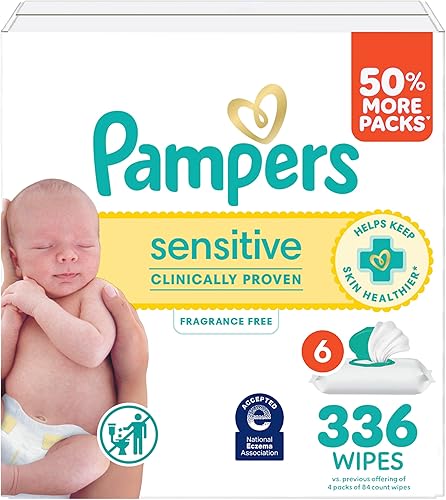
WaterWipes Original are the best baby wipes for diaper rash for most families, because they list only water and grapefruit seed extract and carry the NEA Seal. Huggies Natural Care Sensitive is the best lower-cost option with the same seal.
Yes, baby wipes can cause or worsen diaper rash if they contain an ingredient your baby reacts to, such as fragrance, drying alcohol, or the preservative MIT. Cleveland Clinic lists an allergic reaction to wipes as one type of diaper rash (Cleveland Clinic, 2023).
No. Fragrance-free means no fragrance ingredients were added, while unscented means the product has no noticeable smell and may still contain masking agents. Choose wipes labeled “fragrance-free” for rash-prone skin.
Use plain warm water when the rash is severe, blistered, or broken, and switch back to a gentle wipe once the skin heals. For mild redness, a fragrance-free, 99% water wipe used with light dabbing is fine (Nationwide Children’s Hospital, 2022).
The National Eczema Association Seal of Acceptance means the NEA reviewed the product’s ingredient, safety, and toxicity data and judged it suitable for people with eczema or sensitive skin. WaterWipes, Huggies Natural Care Sensitive, Huggies Skin Essentials, Coterie, and Honest all carry it.
A newborn typically needs 8 to 12 diaper changes a day, and messy changes use two or more wipes each. Budget for roughly 15 to 25 wipes a day in the first months, which is why per-wipe cost matters.
Water-based wipes are usually the safest starting point for babies with eczema, because they contain the fewest ingredients. Look for the NEA Seal, and stop any wipe that seems to trigger a flare.
WaterWipes Original is the best baby wipe for diaper rash, with a two-ingredient label and the NEA Seal that make it the safest choice when skin is already red. For everyday use on a budget, Huggies Natural Care Sensitive gives you the same seal and no MIT or phenoxyethanol at about $0.04 per wipe.
If you want the largest sheet and the fewest passes per change, Coterie The Wipe is worth its higher price. Whichever you choose, buy fragrance-free and alcohol-free, and switch to plain water if the skin breaks.